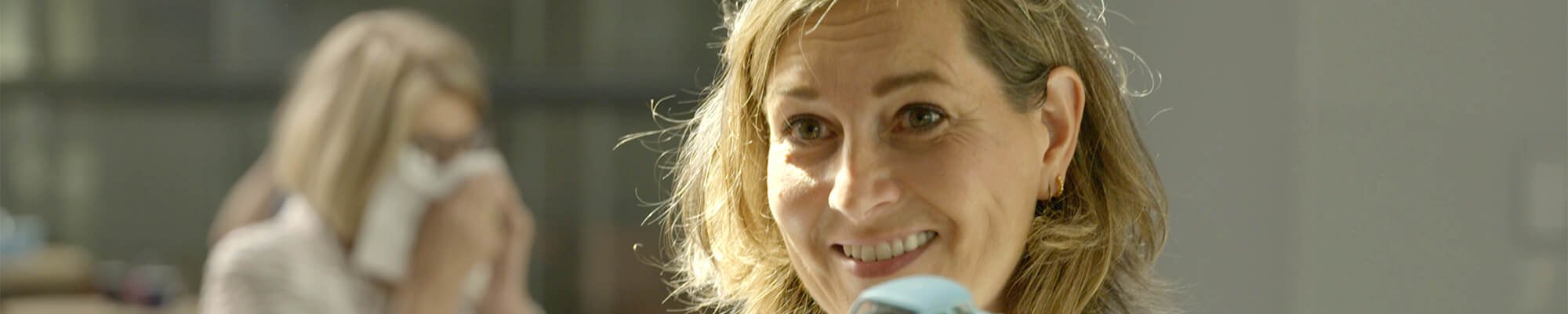
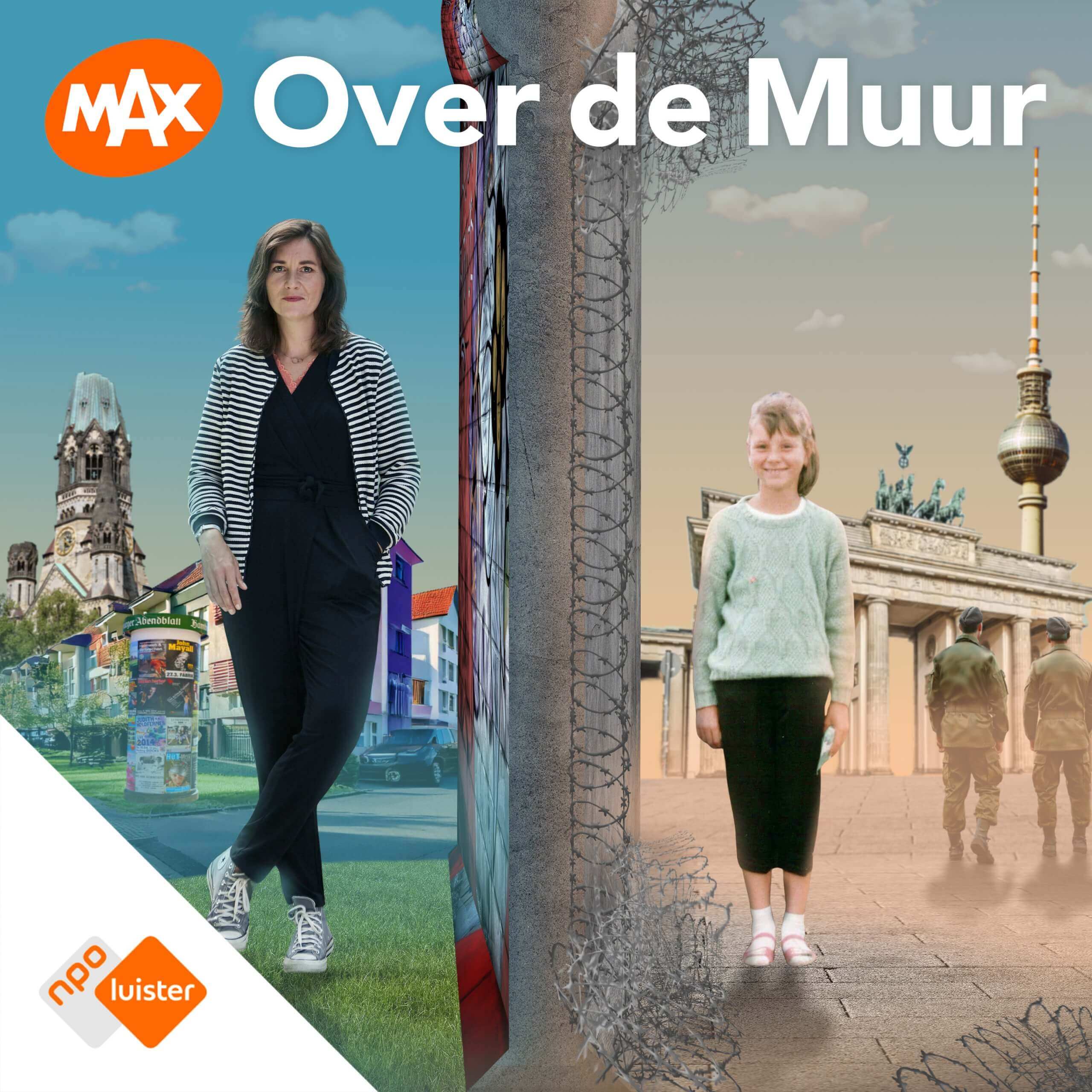
I come from a country that no longer exists. The Berlin Wall fell 35 years ago, on November 9, 1989. I grew up on the eastern side of it, but I’ve now been living in the Netherlands for half my life.
In the podcast “Over de Muur,” I look back. What memories do I still have? And how do my elementary school classmates look back on this? But the Netherlands also played an important role in the Cold War and maintained (trade) relations with the GDR. How did my new homeland view my old one back then?
The GDR is also best known for its secret police—the Stasi—which was proportionally larger than the Gestapo and the KGB. So that’s all the more reason to ask my parents about this. Were there spies in my family, too?
Listening links:


| Episode 1: My Childhood in the GDR | |  | |
| Episode 2: Over the Wall | | | |
| Episode 3: Spying for the Stasi | | | |
| Episode 4: Unexpected Trade Relations with the Netherlands | | | |
| Episode 5: The Day East and West Became One Again | | | |
| Episode 6: What Remains of the GDR? | | | |
Over the past year, thanks to Kick Stokvis and Matthijs Holtrop from Audiopodcast, I was able to dive into this topic. Nick Preusterink and his invaluable colleagues at Omroep MAX trusted that everything would turn out well.
And so, starting today, the six episodes are available to listen to via NPO Luister.
Many thanks to Beatrice de Graaf, Hanco Jürgens, Jacco Pekelder, and Eleni Braat for their expertise.
With the collaboration of Friso de Zeeuw, Anja Fricke, Helma Coolman, Pauline Broekema, Homme Wedman, Jenny Walther, Monica Valent, and my elementary school classmates, especially Anita Rimpler.
The audio editing was done by Thomas Hoonhout. And Liam Toll’s help was also very much appreciated.
Many thanks also go to all my colleagues at Bureau Regio who gave me the time to tell this story.
And without my parents’ trust, I certainly wouldn’t have been able to make this podcast—tausend Dank!
Precies honderd jaar na het overlijden van de stichter van de communistische Sovjet-Unie, Vladimir Lenin en 35 jaar na het vallen van de Berlijnse Muur onderzoekt journalist Ulrike Nagel de rol die Nederland speelde in de militaristische staat in het Oosten. Daarnaast wil de in Oost-Berlijn geboren Ulrike weten hoe het haar gevormd heeft en hoe de Duitse Democratische Republiek nog in haar zit.

De verwachting was dat in 1989 de spanningen tussen Oost- en West-Duitsland zouden verdwijnen, maar dat is niet gebeurd. Integendeel, door de oorlog in Oekraïne is die spanning wereldwijd weer opgelaaid. De val van de Muur was het einde van een tijdperk waarin ook Nederland een bijzondere rol speelde. Zo dreef Nederland handel met de Duitse Democratische Republiek (DDR) en onderhielden Nederlandse kerken veel contact met Oost-Duitse gezinnen.
