
In Berlin, you never really know for sure.
Is it art?
History?
Or marketing?
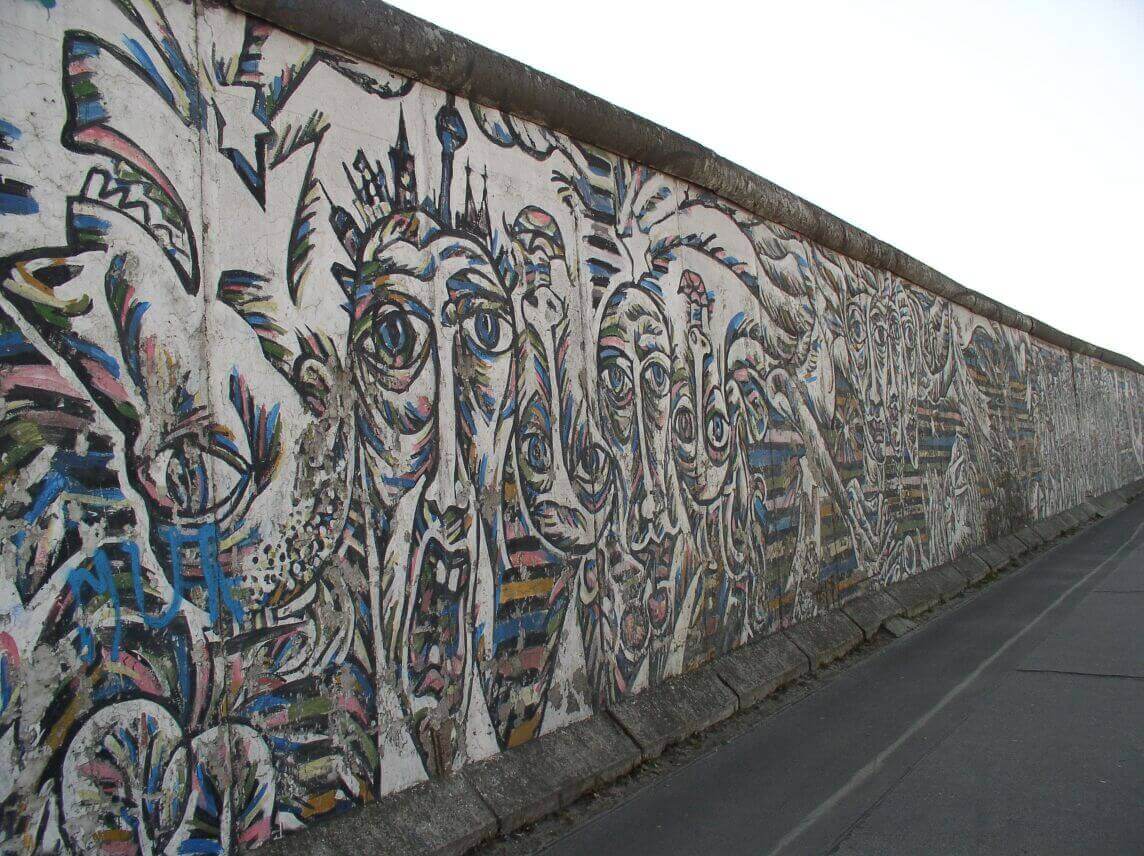
Berlin isn’t a pretty city. It’s no Disney. It’s a city that’s constantly and perpetually changing. A city in the making. And once something is finished, it’s called into question and torn down again 20 years later. Or 40. That’s possible here.
In recent days, not only German but also international newspapers have been filled with articles about “THE Wall.” The authors of these pieces are talking about the East Side Gallery, affectionately abbreviated as ESG on Twitter and Facebook. It almost sounds like a new party pill.
It’s just around the corner from me, less than 10 minutes by bike. I don’t go there very often; I just bike past it. And that’s because I don’t find this 1.3-kilometer stretch all that special.
Maybe because I still remember that section of the wall as a gray stretch behind Warschauer Straße. Of course, I know very little about that time, but I do know that this long stretch, behind which the Spree lies hidden, hasn’t always been as vibrant and colorful as it is now. My memory may be misleading; that’s often the case. Because before 1990, I hardly ever went near Warschauer Straße. I didn’t get off the bus there, because I didn’t have any friends living there and because my parents didn’t work there—two important conditions for a Berlin child to go anywhere.
That means I could only have seen that stretch of the border when there was actually a reason to pass by it. A school field trip? Changing trains on the U-Bahn? The Cold War and the Wall meant that you couldn’t take the subway (toward the West) from this station again until 1995. But by then, there must have been graffiti on it for quite some time.

Over time, the original works of art faded. And so almost all of those international artists painted over them again. Materials from the GDR were never meant to last very long, either, so the bricks gradually crumbled as well. A restoration followed. Historic bricks, with new art and new concrete. And new tourists. Who, I think, often have no idea anymore that it was all gray on this side back then.
History has become art. And yes, the Wall really stood here. But what you see now has little to do with the actual border, which consisted of two walls, with a “death strip” in between—filled with sand, watchtowers, and patrolling soldiers. (If you want to know what it really looked like, you should visit the documentation center on Bernauer Straße, where they show footage from a helicopter that flew over the entire stretch of the Wall in 1990 and ’91, thus capturing the course of the Berlin Wall for eternity.)
Still, the East Side Gallery is a monument—officially so. It has been protected by the city since as early as 1991.
That’s another reason why it’s strange that holes are now being cut into it without warning.
Still, I think the fuss is overblown. We’re talking about a 19-meter stretch. And the city has better examples of its history. Bernauer Straße. The watchtower hidden behind Potsdamer Platz (you have to look for it). The sections of the Todesstreifen that run through large parts of the city, though outside the center. Where most tourists don’t go.
And maybe that’s for the best. Wherever there are lots of tourists, there’s a lot of renovation and adaptation. Because you want to present something beautiful, don’t you? You want to deliver a beautiful city, don’t you? On a silver platter? That’s why the Brandenburg Gate is now whiter than ever. That’s why a new city castle is now being built. Because the GDR palace in the same spot was just too ugly. That’s why there’s a fake border guard hut at Checkpoint Charlie. With fake sandbags. And fake soldiers. That’s why the East Side Gallery is now more cheerful than ever. With neatly mowed grass behind it. And that’s why Berlin has become a bit like Disney after all. Just look for Mickey Mouse on Pariser Platz. (And Darth Vader—I’ve seen him, too. Really.)
Berlin tells plenty of stories from the past. In countless places, especially the ones that haven’t been renovated. The broken and dilapidated ones. The East Side Gallery is definitely a must-see. But it’s not the only one. And it’s not the be-all and end-all.
I always hope that the international city guides know this, too—and that they pass it on to the tourists. But also to the journalists who are writing about it now.
