November 9, 2020, marks exactly 31 years since the fall of the Berlin Wall. Ulrike (41) lives in East Berlin with her Dutch boyfriend Jos and their three children, and she grew up there. “It was bizarre back then: overnight, the supermarket was suddenly stocked with all kinds of new products.”
Read the full article by clicking the download button (PDF; 1.2 MB)
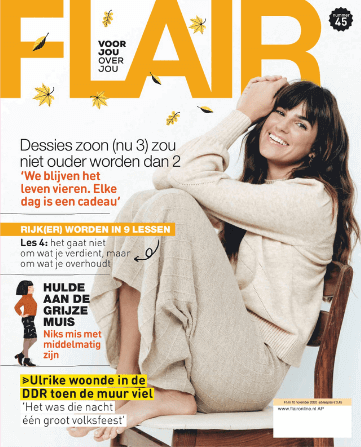
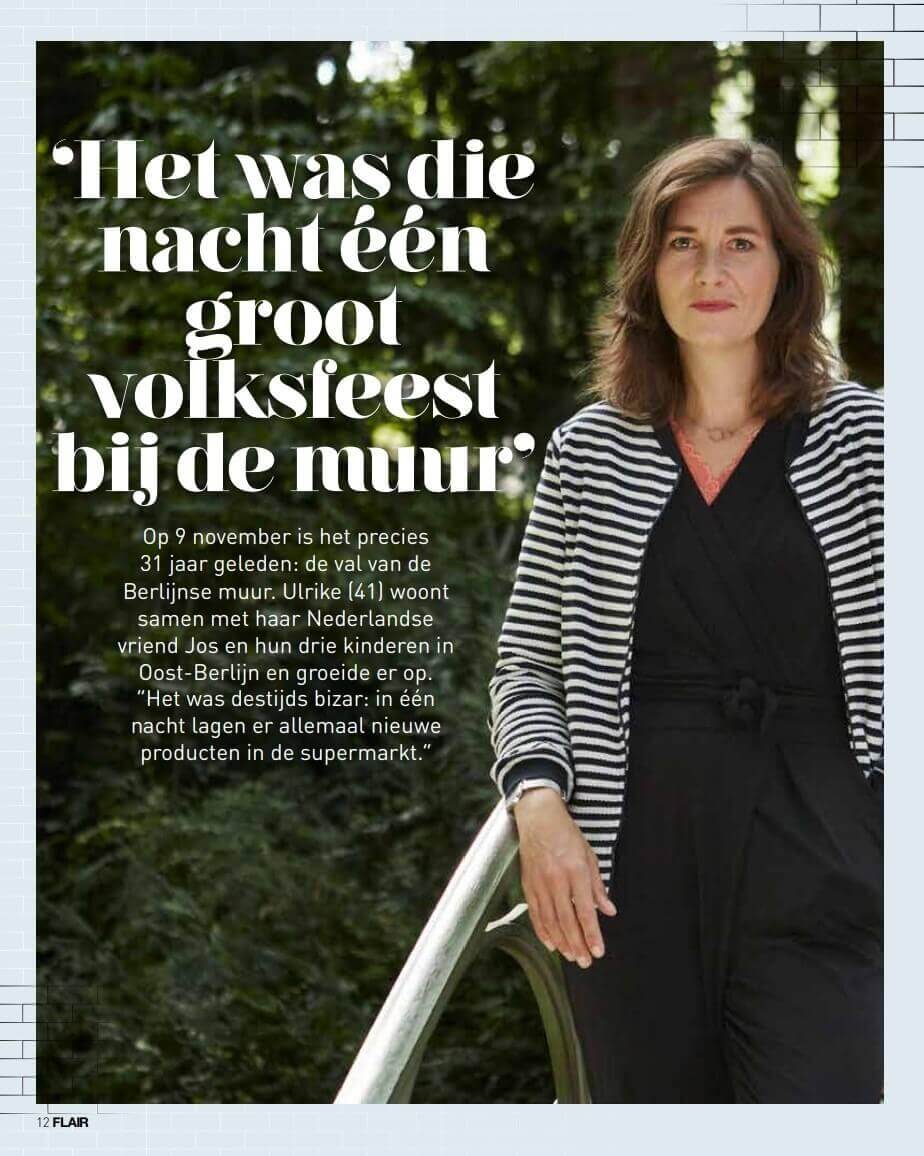
Summary
This is a summary of the interview with Ulrike Nagel (41) in Flair, in which she talks about her childhood in East Berlin and her experiences surrounding the fall of the Berlin Wall.
Personal Experiences Surrounding the Fall of the Wall
Ulrike was living in a suburb of East Berlin as a ten-year-old girl when the Wall fell on November 9, 1989. She was asleep and wasn’t woken up to go to the Wall, where there was “one big public celebration” that night.
First Time in the West
- Welcome Money: After the Wall fell, all East Germans received fifty German marks in “welcome money” from West Germany. Her grandmother used it to buy her first Barbie doll.
- First Crossing: The day after the fall, she crossed the border into West Berlin for the first time with her father and great-grandmother. She was amazed by the department stores, movie theaters, and a giant chocolate Santa Claus on Kurfürstendamm—things she hadn’t seen in the GDR.
- Her mother’s journey: The day after the Wall fell, her mother flew to Iceland, where she and her colleagues were welcomed as heroes by the president, as they were the first East Germans to arrive in the country after the border opened.
Life in the GDR
- Propaganda and Oppression: The GDR was labeled a dictatorship, more or less controlled from Moscow. The Stasi security service eavesdropped on people; criticism could lead to problems, such as being barred from attending university. Traveling abroad was prohibited without permission.
- Consumption: In the GDR, there was only one type or one brand of everything. After the fall of the Wall, it was “bizarre” that overnight all the supermarket shelves changed and were filled with new products.
- Education and Youth: She had to learn Russian in school. Children were required to join the socialist youth movement, the Pioniere, which she actually enjoyed. Anyone who refused to join the Freie Deutsche Jugend at age fourteen could forget about getting into college.
- Parents’ Attitude: Her parents, like many educated people, saw through the state propaganda but went along with it.
After Reunification and the Current Outlook
- Challenges: The fall of the Wall wasn’t easy for everyone. Many East German companies were shut down, causing many workers to lose their jobs and struggle to find new ones. People weren’t used to “selling” themselves in Western society.
- Independence: Ulrike attributes her current independence and frugality to her childhood in the GDR. Because everyone in the GDR (including women) worked full-time, childcare was available 24 hours a day. She now lets her children do more on their own than Western parents do.
- Ossies: She feels a quicker connection with other Ossies (East Germans), who, in her view, have a stronger sense of community and are less formal.
- Conclusion: Although she calls the socialist regime “not a good system at all,” she looks back on her childhood with fondness. She concludes that freedom is the most important thing.
