Journalist | Editor | Chairperson | Germany expert / correspondent | in Hilversum & Berlin
On Radio 1: German municipalities want more help with refugee resettlement
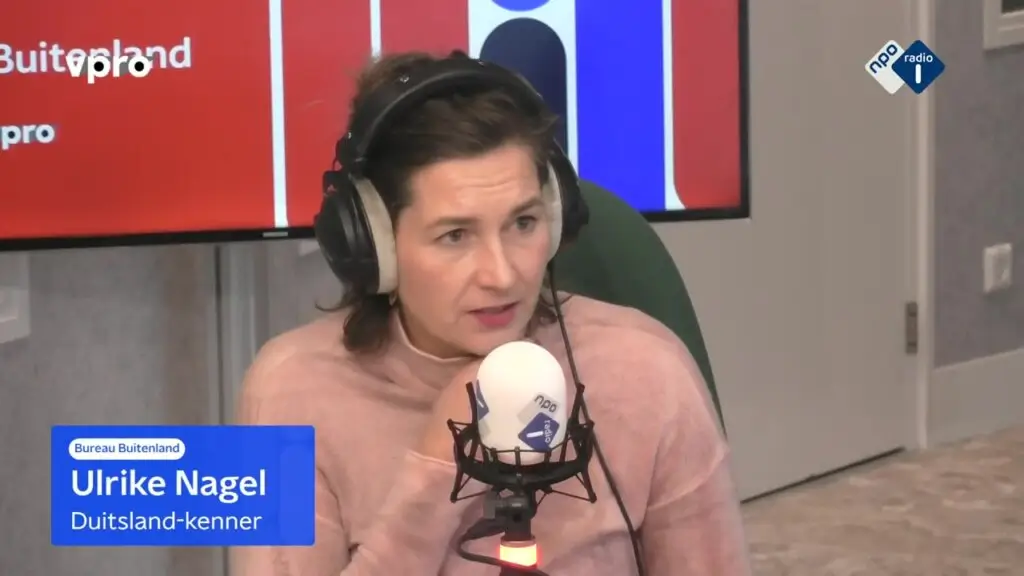
German municipalities want more help from the government in accommodating refugees. The government has promised funding, but they say it’s nowhere near enough. Do they have a point? And how unusual is it for local officials to speak out about this in the media? We ask Germany expert Ulrike Nagel.
Summary
Journalist Ulrike Nagel and Tim de Wit discuss the rising tensions surrounding the reception of refugees in Germany on NPO Radio 1’s “Bureau Buitenland,” with German municipalities and states urging the federal government to provide more support.
Ulrike Nagel on Radio 1: Bureau Buitenland – German municipalities want more help with refugee reception
Rising Numbers of Refugees [00:00]: Since the war in Ukraine began, 1 million Ukrainian refugees have sought refuge in Germany, in addition to 250,000 asylum seekers (in 2022) from countries such as Afghanistan, Syria, and Iraq. It is expected that another 300,000 to 400,000 asylum seekers will arrive in 2023, partly due to the earthquake in Syria and Turkey [03:10].
Financial Burden and Differences in Capacity [01:37]: In 2016, the federal government covered 40% of reception costs; now that figure is only 20%. The federal states, which have a great deal of power and are responsible for reception [04:14], bear a disproportionately large share of the financial burden. North Rhine-Westphalia alone needed 3 billion euros last year—nearly the entire national budget of 3.5 billion [02:13]. There are also major differences in reception capacity among the states, with the eastern states still having room while Bavaria is at full capacity [03:39].
Warning Signs and Solutions [02:35]: Minister-President Wüst of North Rhine-Westphalia and other states are sounding the alarm and demanding not only more funding but also input on solutions. The status of Ukrainian refugees, who integrate more quickly and make use of services such as childcare and language classes, is putting additional pressure on these sectors, similar to the situation in the Netherlands [04:33].
Criticism from the Greens [05:31]: Notably, a group of Green Party politicians, including Mayor Boris Palmer, is critical of migration policy. They warn that an excessive influx comes at the expense of the integration of highly educated asylum seekers and could lead to chaos, which undermines public support [06:14].
Growing Resistance [06:54]: There are increasing signs of resistance and protests in German society against the reception of migrants, particularly in eastern Germany [07:55]. However, Germans are reluctant to publicize these kinds of tensions in the media, partly due to the history of arson attacks on asylum seeker centers in the 1990s [07:31].
Scholz’s Response and Delay [08:20]: The federal government, represented by the Minister of the Interior, acknowledges the problems but has been slow to make concrete commitments. Chancellor Scholz promises to discuss funding further in early April, which many consider too late [08:52].
The situation is tense and calls for swift and coordinated action from all levels of government to calm the migration debate and ensure adequate reception.
On “Bureau Buitenland,” you’ll hear international news, reports, and geopolitical analysis. Featuring background stories and noteworthy reports, Monday through Friday from 1:30 to 2:00 p.m. Hosts: Sophie Derkzen and Tim de Wit