Journalist | Editor | Chairperson | Germany expert / correspondent | in Hilversum & Berlin
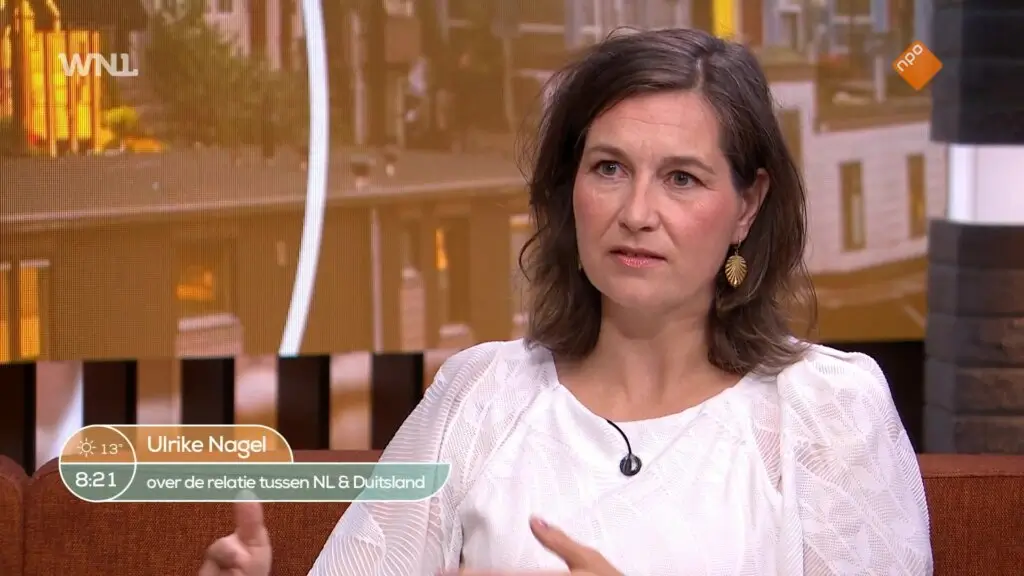
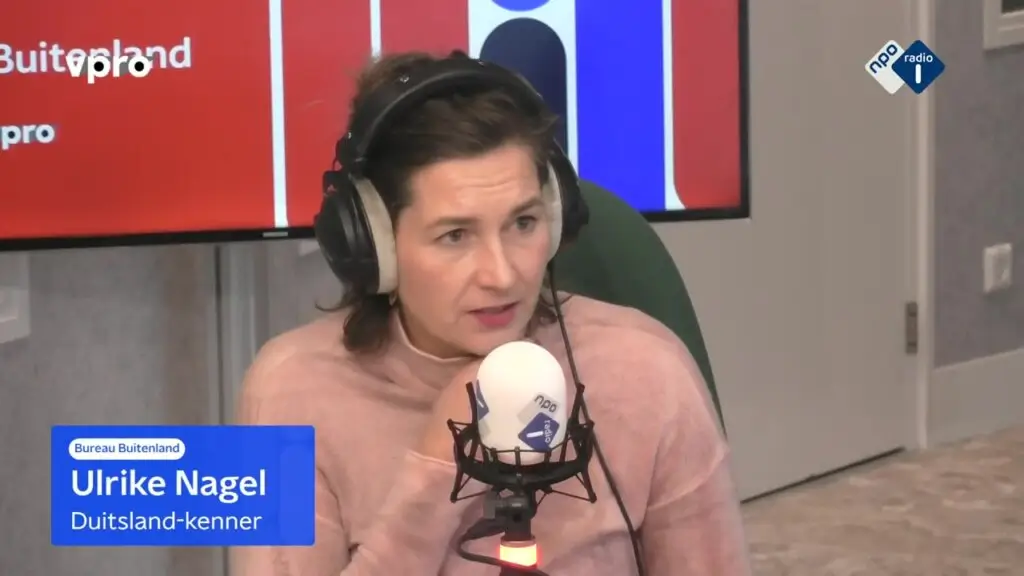
Ulrike Nagel on “Goedemorgen Nederland” discussing the German elections in Saxony-Anhalt
In this episode of *Goedemorgen Nederland*, journalist and Germany expert Ulrike Nagel discusses a number of current and rather concerning developments in Germany. The conversation begins with a brief discussion of cross-border crime but quickly shifts to the upcoming state elections in Saxony-Anhalt and Russian espionage.
Tensions are running high surrounding the state elections in Saxony-Anhalt, where the far-right AfD (Alternative für Deutschland), led by party leader Ulrich Siegmund, is on track for a major victory. What are their radical plans for education and the cultural sector, and why does their nostalgic message resonate so strongly in former East Germany?
Ulrike also discusses legitimate concerns about national security, including fears that the AfD might gain access to intelligence agencies, and recent discoveries of targeted Russian sabotage attempts against German infrastructure.
📌 Sections in this video: 00:00 – Introduction & the approach to Dutch ATM bombers in Germany 01:21 – The rise of the AfD in Saxony-Anhalt and the success of “Ulli” Siegmund 03:34 – Radical election plans: mandatory patriotism in schools 05:03 – Consequences for culture (“un-German art”), migration, and intelligence services 12:36 – Russian espionage, drones, and sabotage of the German power grid
Ulrike Nagel on “Goedemorgen Nederland” discussing the German elections in Saxony-Anhalt
ATM bombers [00:22]
At the beginning of the segment, there is a brief discussion of the nuisance caused by Dutch ATM bombers in Germany. Ulrike explains that this problem is more significant in Germany than in the Netherlands, simply because there are many more ATMs in Germany and Germans still pay with cash much more often.
The Rise of the AfD in Saxony-Anhalt [01:21]
Tensions surrounding the state elections in Saxony-Anhalt are running high. The far-right AfD (Alternative für Deutschland) is on the rise and is even hoping for an absolute majority. The party’s leader (Ulrich Siegmund, known as “Ulli” by his supporters) is very popular [02:25]. Ulrike describes him as a smooth salesman—he used to sell perfume—who is very friendly, down-to-earth, and speaks the local dialect. Supporters treat him like a pop star.
The party is campaigning on a platform of bringing back “the good, safe Germany of the past” [04:18]. Ulrike counters this by emphasizing that this idealized past never existed; after the fall of the Wall, East Germany was actually in ruins and plagued by high unemployment and crime. Although the country has been greatly revitalized since then, there remains a great deal of discontent, which the AfD is cleverly capitalizing on.
Radical positions of the AfD [03:34]
If the AfD seizes power in Saxony-Anhalt, this could have far-reaching consequences, since German states have a great deal of autonomy (for example, over education and subsidies). The party wants a German flag to fly at every school and for patriotism to be promoted [03:54]. Ulrike is surprised by this, as it strongly resembles the mandatory patriotism that was once imposed on residents in communist East Germany.
In addition, the AfD wants to cut off subsidies for institutions that produce so-called “un-German art” [05:42]. Ulrike draws a frightening parallel here with the term *Entartete Kunst* from the Nazi era. The party also wants to scale back Holocaust education (“a notch or two”) [06:16]. Furthermore, the party would prefer to see “culturally alien” migrants leave [06:05]. Ulrike points out the impracticality and dangers of this, given that a quarter of all doctors in Saxony-Anhalt, for example, come from abroad.
Concerns about national security and Russian espionage [05:03]
There is great fear that the AfD (which is known for being very “pro-Russia”) could gain access to classified intelligence documents if it secures an absolute majority [06:35]. There is a real fear that state secrets could be leaked in this way.
Ulrike Nagel on “Goedemorgen Nederland” discussing the German elections in Saxony-Anhalt
Later in the broadcast, Ulrike discusses the discovery of “launchers” (tubes containing fireworks rockets with copper wires) intended to sabotage power poles and cables and thus shut down the power grid [12:36]. These were found, among other places, near the Dutch border (Dormagen) and in the east (Brandenburg).
In addition to these sabotage attempts, a drone carrying explosives was discovered near Leipzig [13:39]. German Chancellor Scholz has, for the first time, publicly voiced the suspicion that Russia is behind these types of attacks or attempts thereof. Ulrike soberly notes that security services must remain constantly vigilant about this, and that Russian espionage in eastern Germany is actually something that has been going on since the Cold War.