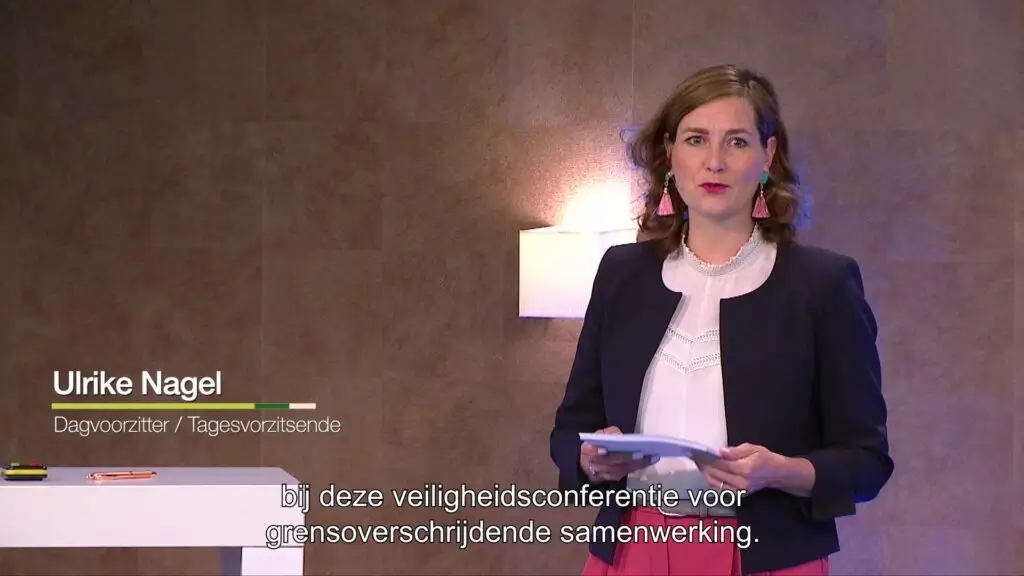
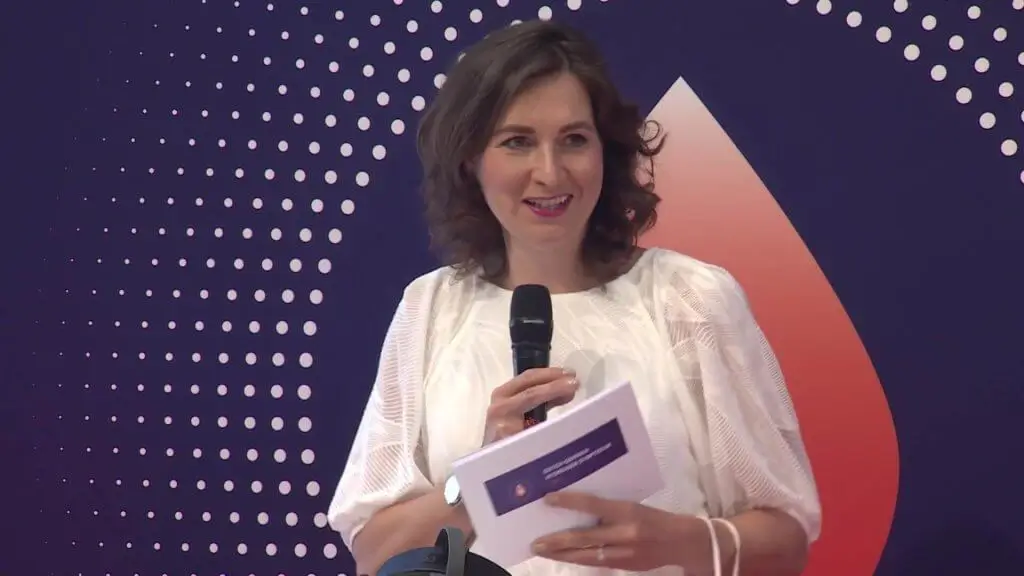
Journalist | Editor | Chairperson | Germany expert / correspondent | in Hilversum & Berlin
Tesla from Tilburg Draws a Lot of Attention at the Hannover Messe
What is an American electric car doing in the Dutch pavilion? Ulrike Nagel asks Professor Maarten Steinbuch of Eindhoven University of Technology.
The Netherlands is this year’s official partner country at Hannover Messe 2014. From April 7 through 11, more than 270 Dutch companies will present themselves to the public under the motto “Global Challenges, Dutch Solutions.” Hannover Messe is the world’s leading industrial trade fair.
Ulrike Nagel at Hannover Messe
The video is an interview with Maarten Steinbuch of Eindhoven University of Technology (TU Eindhoven), which takes place at the Hannover Messe and focuses on the Tesla Model S, an electric car.
Key points from the interview:
Electric Driving and Performance: Steinbuch emphasizes that the Tesla is a 100% electric car with a range of at least 350 km. He is particularly enthusiastic about the driving experience, which he calls “phenomenal.” Electric driving provides instant acceleration and power as soon as the “accelerator pedal” is pressed, which is a significant difference from internal combustion engines that first need to rev up. The car’s responsiveness is exceptional.
Origin and Production: Although Tesla is an American car from Silicon Valley, its European headquarters is located in Tilburg. The car is assembled in Tilburg (the wheels, battery, and electric motor are installed), but is actually manufactured in Fremont, California.
Cost and Segment: The car is expensive and falls into the premium segment, with prices starting at €70,000. However, Steinbuch notes that the car is no more expensive than comparable cars in its class, such as a BMW 7 Series or Audi A6.
Running Costs and Superchargers: The car is very economical to drive (Steinbuch drives his own Tesla for about 3 cents per kilometer). He discusses Tesla’s Supercharger infrastructure, a charging system that fills the battery to three-quarters capacity in about half an hour—enough for 250 km of driving—and this is free (at the time of recording).
Supercharger Network: The Supercharger network was still under development at that time. By the end of that year (2014, presumably), there would be Superchargers throughout Europe. There was already a route from the Netherlands to winter sports destinations with Superchargers (two in the Netherlands and six in Germany, Austria, and Switzerland). By summer, there would be a route to southern France, and after the summer, they would cover the rest of Germany with Superchargers.
Duitslandnieuws provides various news services from Germany aimed at Dutch-speaking readers interested in Germany. Duitslandnieuws writes articles, produces radio and TV programs, and organizes or supports events. Duitslandnieuws is the brainchild of Derk Marseille and Bertus Bouwman from Berlin. The two journalists can be heard or read weekly in various Dutch media outlets.