Journalist | Editor | Chairperson | Germany expert / correspondent | in Hilversum & Berlin
Radio 1: Bureau Buitenland – Ukrainians at Hauptbahnhof
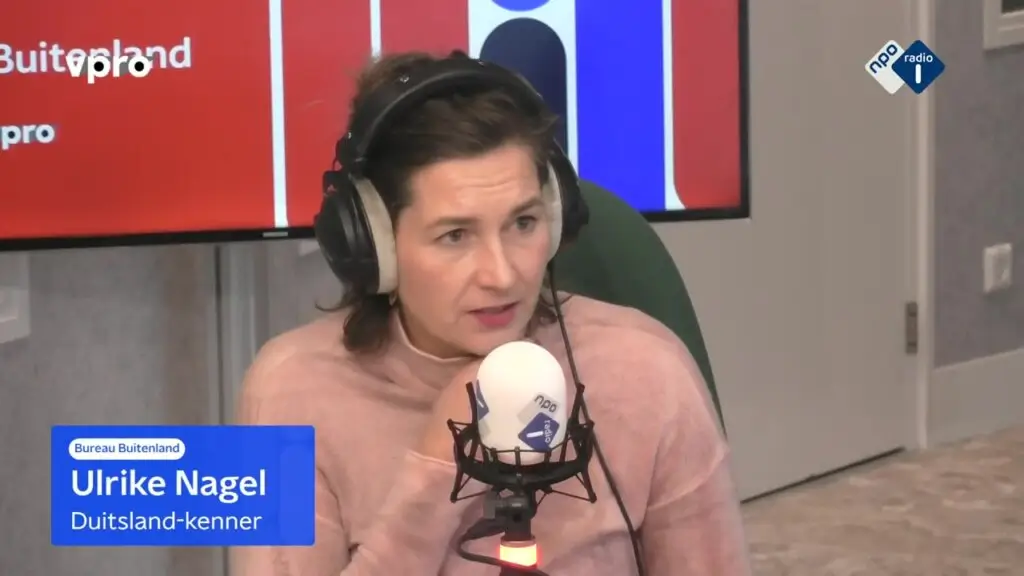
After Poland, Berlin’s Hauptbahnhof is one of the largest arrival points for people who have fled Ukraine. In addition to its geographic location, this is also due to the special role Berlin plays in Europe. Journalist Ulrike Nagel discusses this.
Summary of this interview
On NPO Radio 1’s “Bureau Buitenland,” journalist Ulrike Nagel discusses the situation at Berlin’s Hauptbahnhof, which has become a major arrival point for Ukrainian refugees following the war.
Massive Influx of Refugees [00:31]: Every day, thousands of refugees—mainly women and children—arrive at Berlin’s Hauptbahnhof. On Saturday, there were 11,000, and on Sunday, more than 10,000. These are unprecedentedly high numbers, even higher than during the 2015 refugee crisis. The station has been transformed into a sort of market hall with clothing, food, and other necessities.
Berlin as a Bridge [01:06]: Berlin is, after Poland, the next major point of arrival. Geographically speaking, Berlin, as an East German city, is close to Poland (an hour by train). Historically, Berlin has always served as a bridge between Eastern and Western Europe.
Historical and Cultural Connections [01:33]: After World War II, East Berlin was under Soviet influence. After the collapse of the Soviet Union, many people from Eastern Bloc countries—including Russians, Belarusians, Ukrainians, and Lithuanians—moved to Berlin. For decades, Russian was the first foreign language taught in schools in East Germany, and many Ukrainians speak Russian as a second language. These historical and cultural ties explain why many Ukrainians and Russians in Berlin often socialize together and why there are many Russian and Ukrainian restaurants where people work together [02:03].
Call for Help [01:01]: Although many Ukrainian women and children are finding shelter with family and friends, Berlin has asked the other federal states for help due to the overwhelming numbers.
Ulrike Nagel on Radio 1: Foreign Affairs Desk – Ukrainians at Hauptbahnhof
“We’re talking about thousands of people a day,” says Ulrike. “Last Saturday there were 11,000; on Sunday there were more than 10,000.” That number is higher than during the peak of the Syrian refugee crisis in 2015. At that time, 8,000 to 9,000 people arrived in Germany every day. So far, 2 million people have fled Ukraine.
On “Bureau Buitenland,” you’ll hear international news, reports, and geopolitical analysis, featuring background stories and remarkable accounts, Monday through Friday from 1:30 to 2:00 p.m. Hosts: Sophie Derkzen and Tim de Wit