Province of Utrecht — By integrating nature into their business operations, farmers and nature can indeed coexist. That is the view of the Utrecht Nature and Environment Federation. They have been working with farmers for several years now to develop very concrete solutions.
TV segment (RTV Utrecht), photos and text by Ulrike Nagel.
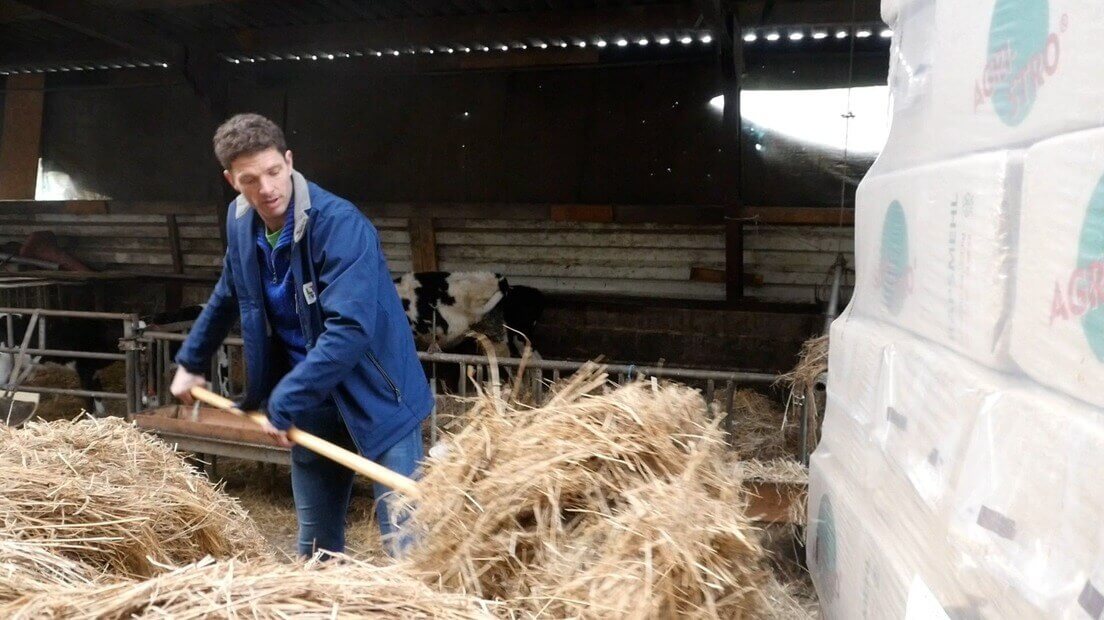
Farmer Jeroen van Wijk has 100 dairy cows in his barn in Odijk, and as a board member of the farmers’ advocacy group LTO, he regularly speaks with his colleagues. Van Wijk therefore knows where the biggest frustrations lie. “This year, many farmers are still frustrated that they’re the only ones expected to solve the nitrogen crisis, meaning that little attention is still being paid to other polluters.”
Farmers are upset about other issues as well. For example, court rulings on nitrogen emissions are leading to the revocation of permits that had already been granted, and farmers feel that there’s hardly any attention paid to the things that are going well. “So if you look at it individually, there’s a lot of protest, but when you sit down and talk with each other, compromises are actually always possible.”
Raise or lower the water level?
Such a compromise is also needed when deciding on the water level. Do you keep the water level high, since that’s good for a Natura 2000 area like the ash coppice forest near Overlangbroek? Or do you lower the water level for the surrounding farms?
Josja Veraart of the Utrecht Nature and Environment Federation says you don’t necessarily have to choose, but that you should ask the farmer what the options are for him. “You can also ask what someone needs. And maybe the solution isn’t even that the farmer needs a low water level—but you’ll only discover their wishes and possibilities once you start a conversation.”
The NMU has been working with farmers for a few years now to explore how nature can be integrated into their operations. For example, as part of the “Sustainable Agriculture with Nature” collaboration, farmer Jeroen van Wijk manages a nature reserve on the Vollenhove estate near Zeist. “I started that two years ago, and that feed goes to a horse farm; I also use it to feed the cows that aren’t producing milk.”
It won’t work without a revenue model for the farmer
In addition, Jeroen ensures that the edges along the ditches on his land remain free of manure and is actively committed to protecting meadow birds. He cares about nature, but not without considering revenue models.
Josja Veraart of the NMU: “There are even more examples, such as nut trees on a farmer’s property. You can harvest those nuts, so there’s a revenue model there. And there’s another benefit: the cows can also seek shelter in the shade of those trees. And it’s good for biodiversity. Of course, this isn’t an option for every farmer, but that’s why we’ve also devised various revenue models. For example, agreements can be made with Staatsbosbeheer, such as regarding food forests. And we can also have their business plans analyzed to see if something is feasible. Because that is a prerequisite.”
Of course, there’s also a lot of skepticism among farmers when they first come into contact with the NMU. Josje Veraart laughs. “There are indeed some farmers who say, ‘I can’t do anything with this at all.’ But when we really start talking, we find that a good partnership can develop and that a great deal is possible. We try to look at the long term, and most farmers see that transition too—though they view it from the perspective of their own capabilities.”
