
Langbroek – The Natura 2000 site near Overlangbroek is in poor condition. “If we don’t take action soon, there won’t be anything left,” says ecologist Wim Verheugt. Together with a fellow ecologist from Utrecht, he wrote a report on the ash coppice forest near the Utrechtse Heuvelrug.
TV segment (RTV Utrecht), photos and text by Ulrike Nagel.
Ecologist Wim Verheugt warns that the Natura 2000 site near Overlangbroek is seriously deteriorating due to excessive nitrogen and low water levels. The centuries-old ash coppice forest, which is home to rare mosses and mushrooms, is under pressure from surrounding agriculture and poor management.
The province of Utrecht partially acknowledges the problems but does not agree with all of Verheugt’s findings. The province is holding discussions with farmers regarding the water level and the approach to nitrogen, although previous attempts to raise the water level failed due to legal objections.
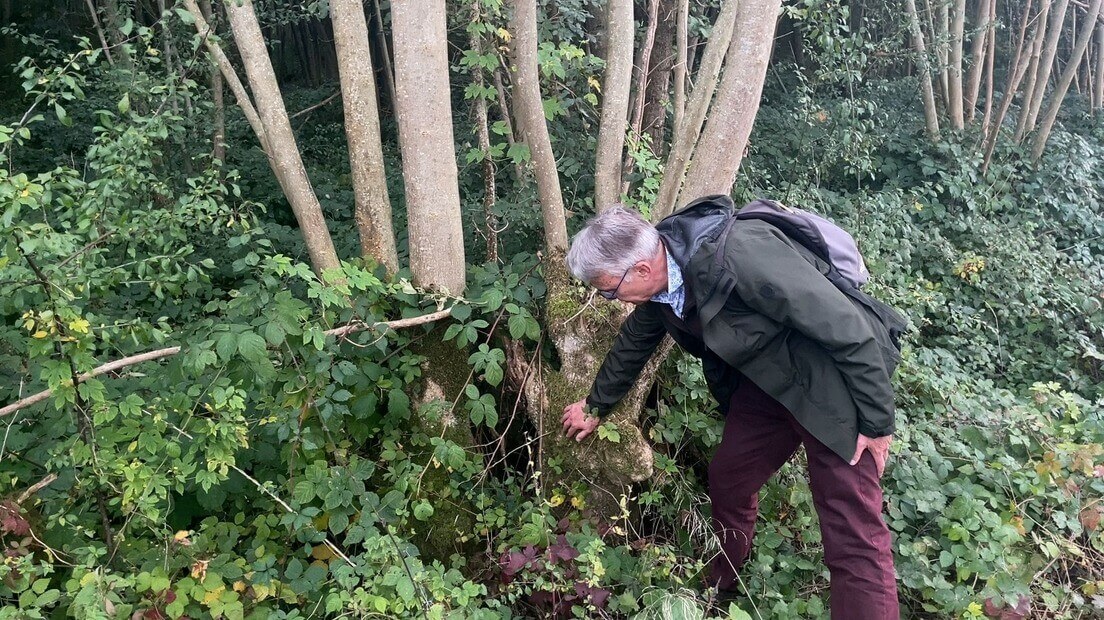
“Look, rare mosses normally grow here. Now there’s nothing but blackberries, which are overgrowing everything.” Wim Verheugt stops at every blade of grass, at every tree. He is an avid birdwatcher, but above all an ecologist. Eight years ago, he returned to the region after traveling all over the world. Verheugt looks back on a long international career. According to his biography, he is a “specialist in energy and agriculture transitions.” He advised Chinese delegations on the need to better maintain their forests, traveled as an advisor with Dutch politicians, and lived in Nepal, Indonesia, and England.
Now he focuses on his immediate surroundings, as part of the Krommerijn-Corridor working group, which is dedicated to “the protection, restoration, and enhancement of the cultural-historical landscape.” In that capacity, he authored the report published last summer.
Costly Maintenance
“Look,” says Verheugt, walking along the fence of the ash coppice forest. “The Dutch Forestry Commission has installed this barrier well here; this way, the deer can’t get to the trees.” But he mainly lists what isn’t going well. “Ideally, the province would like to stop maintaining this ash coppice forest. Because it costs a lot of money. But that’s not so simple, because we’ve agreed within the EU to protect and preserve this natural area.”
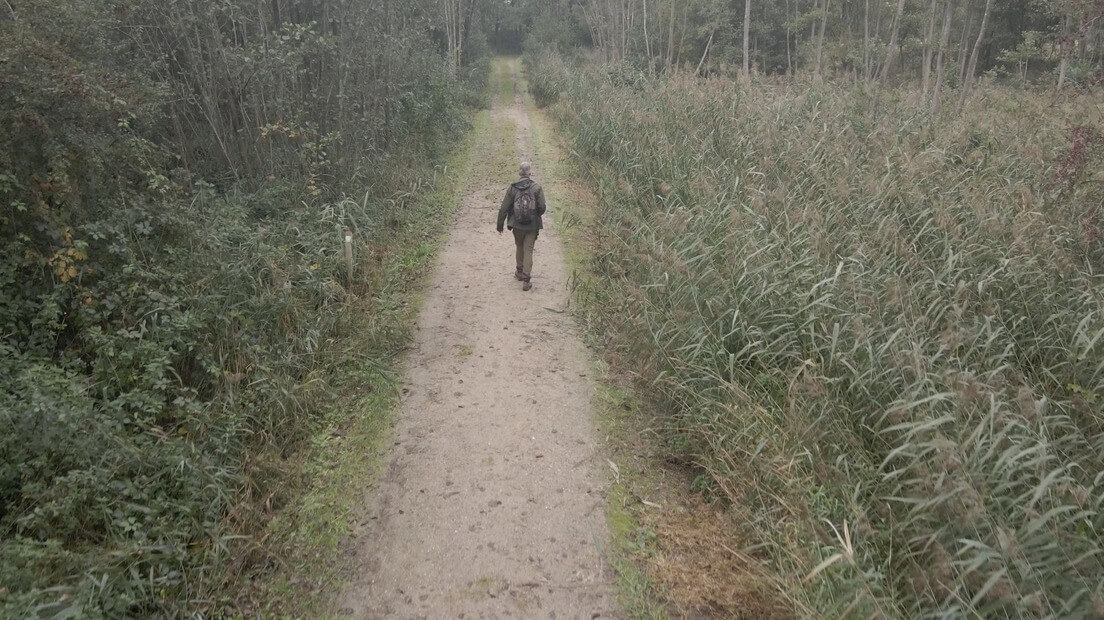
In 2004, the Netherlands designated the nature areas that must be protected within the EU. This ash coppice forest made the list. “You have ash and alder trees here, and on the stumps of the trees grow unique mosses that are very rare. And mushrooms. Ash coppice was used for all sorts of things in the past—as wood for axes, shovels, and carriage wheels, for example. It’s centuries old; 900 years ago, the bishops had already begun clearing the land here in the region.”
The province says it has no intention whatsoever of getting rid of the ash coppice forest, according to a spokesperson. The province acknowledges the forest’s unique character but disagrees with Verheugt’s findings. “This ash coppice on nutrient-rich clay soils constitutes a forest type that is rare in Europe,” the spokesperson said. The province therefore believes that its Natura 2000 status is well-deserved. Sufficient funds are available for maintenance, even though it is relatively expensive.
A house of cards collapsing
Wim Verheugt also believes it is justified that the forest has been added to the list of Natura 2000 sites. “We’ve all built this landscape together. The Netherlands has ‘man-made’ nature, but that man-made nature is still quite special. You might wonder why moss is important, but why are humans important? Every creature, every species has intrinsic value. And everything is interconnected. If you remove something from that system, it might collapse like a house of cards.”
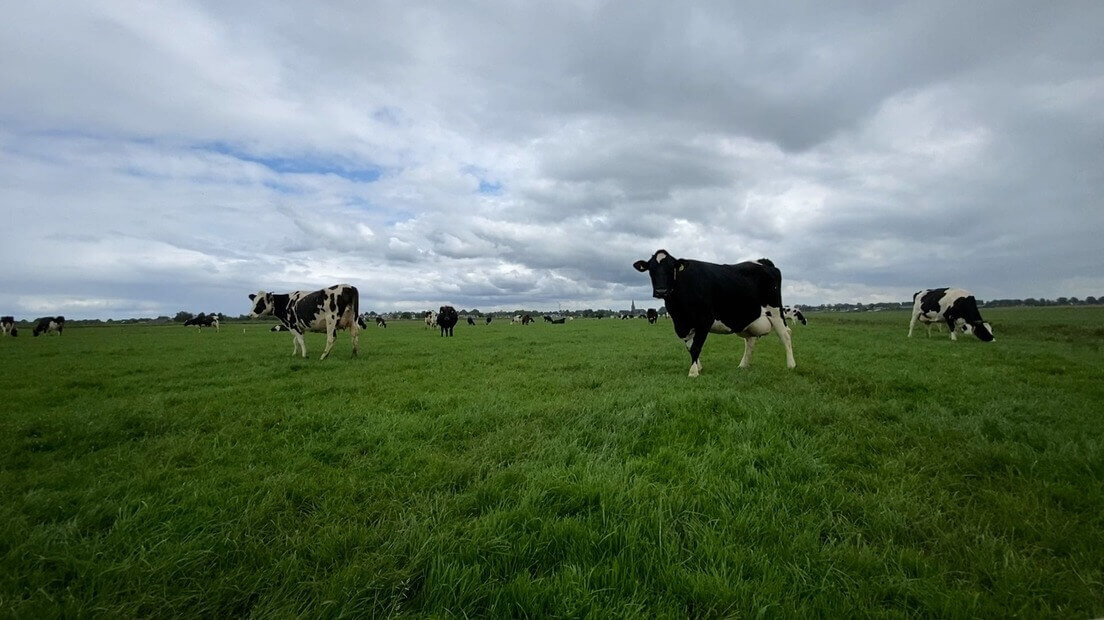
Too much nitrogen and too little water are a threat to the trees here. Verheugt points to a ditch between the trees. “This should actually be under water—permanently. And not just for a short time, but for a long time. It’s far too dry here because the farmers in the area need a low water level to operate their machinery. But the plants actually need much more water.” He points to the water level of a weir. “That’s way too low. But right next to it runs a drainage ditch, because there’s a farmer here and this is already at agricultural level.”
Dilemma: Nature or Farmers?
This immediately touches on the dilemma underlying the nitrogen issue. What takes priority: nature or the farmer? Wim Verheugt recognizes that dilemma as well. “As a birdwatcher, I regularly sit down with farmers. And that really weighs on me, because they’re vulnerable. But for years now, the province has been feeding them the wrong narrative. Ever since this area was designated in 2004, the province could have sat down with the farmers to discuss how they could farm less extensively, so they could continue farming alongside this Natura 2000 area. Even LTO knows that intensive livestock farming no longer fits alongside a Natura 2000 area.”
He also criticizes the province for failing to manage the forest here properly. “For example, linden trees have been planted among the trees, but if you start tinkering with a Natura 2000 area, you’re in violation. It’s not a botanical garden; you have to preserve it as stipulated in the agreements.”
Low water level
According to the province, there are good reasons for planting other trees in this area. This is because the canopy has thinned considerably due to ash dieback. “Planting tree species that are not susceptible to ash dieback helps close the canopy. As a result, the coppice stumps are less likely to become overgrown. By planting other tree species, the ecosystem can be made more robust, and the coppice stumps can hopefully be preserved,” according to the province.
The province acknowledges that the low water level in the area is a problem. Due to increased drought in recent years, the groundwater level throughout the entire area is falling. Attempts have been made in the past to raise the water level here, but those efforts met with resistance. In 2019, the province attempted to raise the water level in the surrounding area as well, but that decision was overturned on appeal by the Council of State.
Province to Resume Talks with Farmers
As far as the farmers are concerned, the province also recognizes the need for dialogue and has already begun that process. “As a province, we must develop concrete plans to meet the government’s nitrogen targets. But we can only achieve this together with the farmers.” Last week, it became clear that the buyout schemes for farmers are becoming more generous; farmers with the highest emissions are being approached and asked whether they’d be willing to voluntarily cease operations or relocate parts of their farms. In this way, the government aims to reduce nitrogen emissions so that nature can recover.
Wim Verheugt believes that the management of the ash coppice forest must improve quickly. According to him, for example, far fewer bird species can be seen or heard in the area. “We’re talking about a vulnerable ecosystem that has been deteriorating for years. Things are going wrong here, knowingly and willfully.”
