Journalist | Editor | Chairperson | Germany expert / correspondent | in Hilversum & Berlin
RTV Utrecht: Strike in Regional Public Transportation
Province of Utrecht – Regional public transportation workers plan to go on strike for five consecutive days starting February 6 throughout the Netherlands. The unions expect that no buses will run that week.
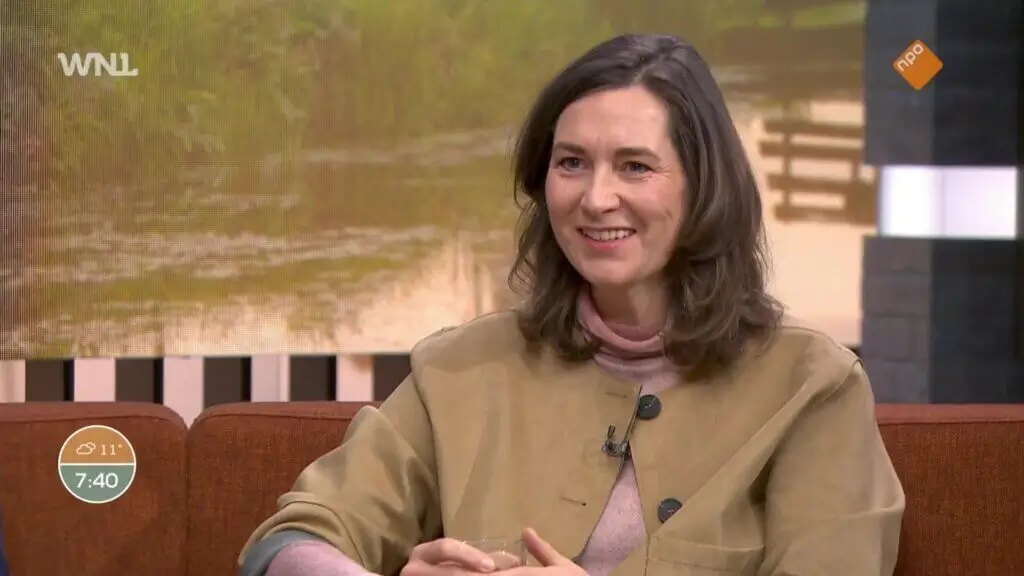
Ulrike Nagel provided further details in the studio during the UNieuws program.
Introduction to the strikes in regional public transportation [00:03]: Since May of last year, bus drivers, tram and bus operators, and other regional public transportation employees have been taking action. A larger strike is planned starting February 6, with the CNV union joining the action alongside the FNV drivers and conductors who have been on strike so far [00:11]. The reason is a new collective bargaining agreement on which no agreement has been reached [00:25]. FNV held talks today with bus drivers in Oudewater, which confirmed that the strike will last for one week [00:30]. Ulrike Nagel was present at these talks [00:43].
Why the negotiations are at a standstill
Negotiations have reached an impasse because employers and employees have completely different ideas of what is reasonable [00:47].
Employers’ offer: [00:57] The public transportation employers’ association has offered an 8% wage increase, which they consider to be substantial. With additional percentages for older employees, they claim this actually amounts to 11% [01:06].
Employees’ position: [01:04] Bus drivers and their FNV allies consider this offer insufficient and have walked away from the negotiating table. They’ve been negotiating for nearly a year, and the willingness to take action is growing, especially because employers are “arrogantly saying no” and have made no concessions to the proposed demands [01:23]. One bus driver emphasized the pressure and the lack of appreciation, especially when people speak disparagingly about their MBO-2 level [01:58].
More Than Just Wages: Appreciation and Respect
For the bus drivers, it’s about much more than just pay [02:14].
Flexibility clause: [02:22] A great deal of flexibility is expected of employees, which means, for example, that they have to start work at 5 a.m. at a location other than where they live. This requires adjustments, such as owning a car, and makes working irregular shifts difficult [02:36].
Lack of appreciation and respect: [02:43] The drivers feel a lack of appreciation and respect, something the employers do not acknowledge. The employers claim that there is indeed respect for the profession and that they view bus drivers as professionals [02:59].
Financial dilemmas and disagreements
Employers claim that the sector cannot offer more than what is currently available [03:10].
Limited finances: [03:16] They argue that the sector has no more money and that they have already given more than they have. Only 5% of labor costs are subsidized by the government, and the rest must be paid out of pocket [03:22].
Impact of COVID-19: [03:38] COVID-19 has hit the sector hard, with 15% of travelers yet to return, posing a major financial problem.
Employees dispute financial distress: [03:48] The employees and their FNV allies dispute this financial distress. They argue that the public transportation companies have wealthy shareholders (large German and French companies), and that there is therefore certainly enough money [03:54].
The employers’ association has indicated that it will not yield to the pressure and will not return to the negotiating table [04:12]. The offer is on the table, and the employees should accept it [04:23]. The employees, on the other hand, say they will continue striking [04:29]. So we’ll have to wait and see how this plays out [04:34].
Ulrike Nagel in the RTV Utrecht studio
Background
Regional public transportation was also on strike last week. Bus drivers and conductors are demanding a better collective bargaining agreement. Since no agreement has yet been reached, new strikes were announced earlier. The FNV union met today with bus drivers in Austerlitz, and the result is that there will be five consecutive days of strikes in early February. The CNV union has also joined the strikes this time.
According to Lutz Kai Kressin of the FNV union, the 8 percent pay raise proposed by employers is insufficient. “That represents a 10 percent loss in purchasing power, so it’s still not much. In addition, little is being done to address the workload, and we want to see that change.”
Buses in Utrecht
‘8 percent is already much more than usual’
Employers consider 8 percent “already much more than what is customary.” Fred Kagie of the Public Transportation Employers’ Association (VWOV) says: “On average, a 6 percent pay raise is offered in the Netherlands. And on top of that, we’re also offering a senior employee benefit plan that costs 2 percent, plus a few other things, so in total we’re looking at 11 percent. Besides, we simply can’t afford to pay any more. The government compensates us for 5 percent of our labor costs, so we’re already exceeding that.”
Moniek van Bennekom is a bus driver who drives on all routes in Utrecht. As a volunteer, she is also involved in the planned strikes. “The pressure is too high. We have to be very flexible, and then we’re constantly asked, ‘Can you do this?’ or ‘Can you do that?’ New drivers often quit after just a year. And then there’s the flexibility clause, for example. On a voluntary basis, one day you have to start from one depot and the next day from another. So suddenly you have to start at 5:00 a.m. in Wijk bij Duurstede, even though you specifically moved to the city to live there. Then you’d have to buy another car, for example. All those little things add up and just leave you completely exhausted at the end of the day. And I also miss the respect from our employer.”
Ulrike Nagel in the RTV Utrecht studio
We’ve made more than a reasonable offer — Fred Kagie on behalf of the employers
Fred Kagie doesn’t share that criticism: “I don’t recognize that. Of course there’s work pressure; public transit is also facing a staff shortage. There’s absenteeism due to illness, but there’s a great deal of respect for the bus drivers. It’s a profession the drivers are exceptionally proud of.”
The new strike will cause a lot of disruption again. “We’ll see where the bus drivers ultimately draw the line for themselves. What we won’t do is return to the negotiating table under this pressure. We’ve made more than a reasonable offer. We simply can’t afford to pay any more. We can’t do it, and we won’t do it. That might sound silly, but it’s really true.”
Negotiations at a Standstill
Negotiations now appear to be at a complete standstill. According to the unions, absenteeism among drivers has now reached about 20 percent. Due to the increasing workload, many buses and trams are also running late, which in turn is leading to more aggression from passengers.
Lutz Kressin of the FNV union: “There are major shareholders behind the transit companies—French and German firms—so there’s definitely money there. And the government also plays a role in this. Apparently, they’re not willing to spend the money on this. But the more arrogantly employers say ‘no,’ the more drivers are willing to take action. Even more flexibility is being demanded of the workers, and they won’t put up with it. We want compensation, and we want to make it to the finish line in good health.”
The unions have issued an ultimatum until next Monday. If the employers haven’t met the unions’ demands by noon that day, the protests will continue, the unions say.