Journalist | Editor | Chairperson | Germany expert / correspondent | in Hilversum & Berlin
Ulrike Nagel: East Berlin was a kind of little paradise
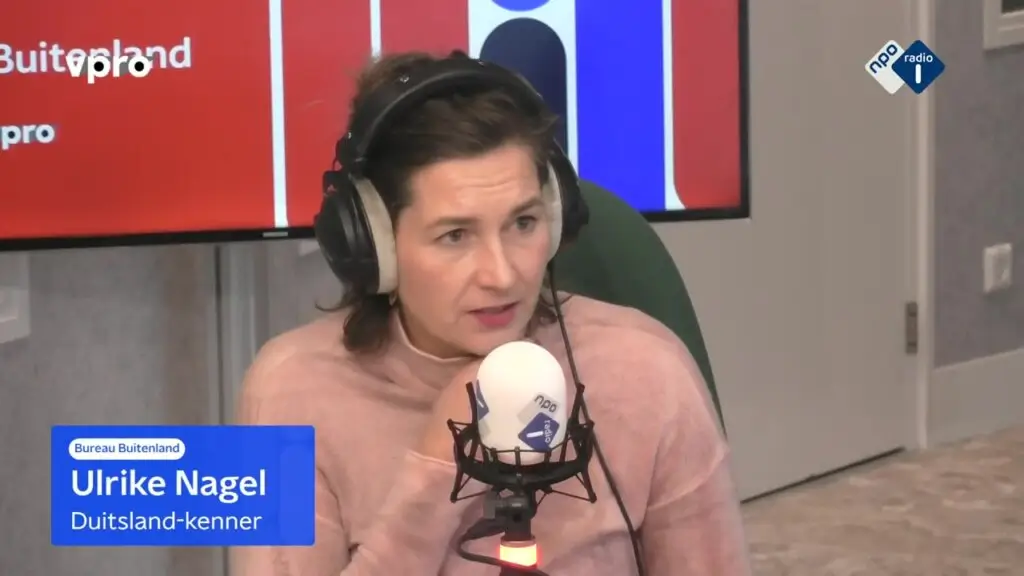
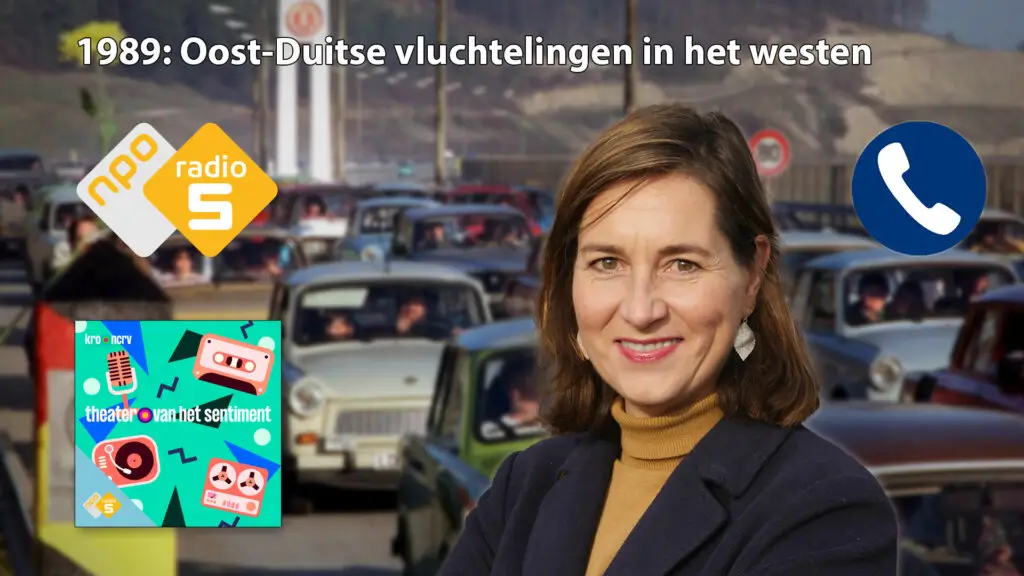
On November 9, 1989, something happened in Germany that had long seemed impossible to the population: the border between East and West suddenly disappeared. The Wall was breached, and free travel became a reality overnight. Ulrike Nagel grew up as a happy child in East Berlin. She was ten when the Iron Curtain fell. In *De Dag*, she looks back on that time and what it was like when she first arrived in West Berlin. Listen to the interview with Ulrike Nagel on Radio 1.
Timestamps ↴
00:00 Jurgen van den Berg 00:19 Berlin clip 01:04 Ulrike Nagel 26:10 Berlin clip
Summary of the conversation ↴
In the podcast “De Dag” on NPO Radio 1, journalist Ulrike Nagel discusses her childhood in East Berlin and the impact of the fall of the Wall, describing the GDR as a “little paradise” for children.
Childhood in the GDR and the Fall of the Wall
Ulrike Nagel grew up in East Berlin and was 10 years old when the Wall fell. She recalls a normal and carefree childhood [01:19], during which she roamed the neighborhood with friends. Both her parents worked, and she and her friends were very independent, often playing outside until late in the evening [01:31]. The family moved from Greifswald to Berlin for work, and after a year in an apartment with a coal stove, they moved into a newly built apartment building in Marzahn with central heating and hot water, which was considered a luxury at the time [02:44].
Awareness of the West [02:48]: Although she lived in East Berlin, Nagel was always aware of a different Germany. This was mainly due to Western products such as Barbies, brightly colored clothing, and books she received from relatives in West Germany or Austria [06:01]. Western commercials on television also contributed to this.
The Fall of the Wall [07:08]: Nagel slept through the press conference announcing the opening of the borders. Her mother, who was the only one who saw the news, was surprised. Two days later, Nagel went with her father and great-grandmother to West Berlin, where she was amazed by the abundance of Western products, free money, and her long-desired Barbie [10:42].
After the Wende [13:51]: For Nagel as a child, daily life went on as usual. She remembers vacations to Denmark, something that would have been unthinkable before the fall of the Wall. Meanwhile, her parents had to reinvent their lives in the new, capitalist system, dealing with new insurance policies and finding their way in a completely different society [22:07].
“East German” Identity and Relationships
Nagel cherishes fond memories of her childhood in the GDR. She now appreciates the experience of growing up with little material abundance—something her children, who are growing up in abundance, do not know [18:22]. She describes the GDR as a “secluded little paradise” [19:30] for children, with plenty of freedom and little crime, homelessness, or unemployment [19:11].
United, but Different [20:04]: Thirty years after reunification, the differences between East and West Germany are still palpable, although Nagel considers the balance to be reasonably even. Economic inequality (twice as much wealth in the West, lower pensions and salaries in the East), however, remains a point of debate. East Germans have, however, developed their own sense of self-awareness and have become more assertive [07:40].
Political Polarization [21:16]: In the years following the fall of the Wall, there was a clear shift to the right in the East, with neo-Nazis visible on the streets. Today, there is significant support for the AfD, driven primarily by discontent in the East German states [22:28]. Nagel sees this as an expression of freedom of speech that has emerged after years of oppression [23:43].
Commemoration and Nostalgia [24:08]: Nagel follows the commemorations of the fall of the Wall, but her personal connection to history makes a symbolic celebration less necessary for her. She recognizes “Ostalgie” (nostalgia for the East) in memories of certain products and a sense of community that no longer exists [18:03].
The podcast offers a nuanced picture of life in the GDR and the complex legacy of German reunification.
Ulrike Nagel – De Dag Podcast: “East Berlin was a kind of little paradise”