Journalist | Editor | Chairperson | Germany expert / correspondent | in Hilversum & Berlin
Radio 1: German “Newcomer” Wagenknecht Is Popular
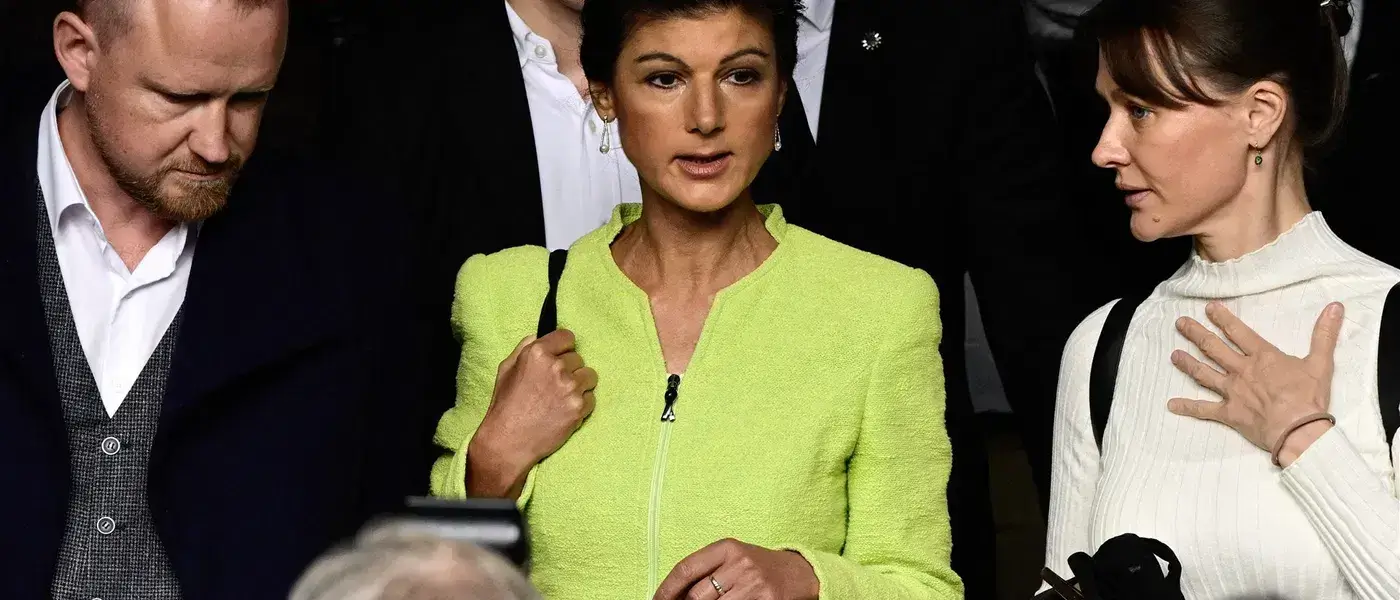
Sahra Wagenknecht was previously a member of parliament for the radical-left party Die Linke, but as of yesterday, she has split from the party along with a number of her fellow lawmakers. She is launching a new movement aimed at disillusioned German voters. And according to the latest polls, they seem eager to support it. Germany expert and journalist Ulrike Nagel discusses the popular politician.
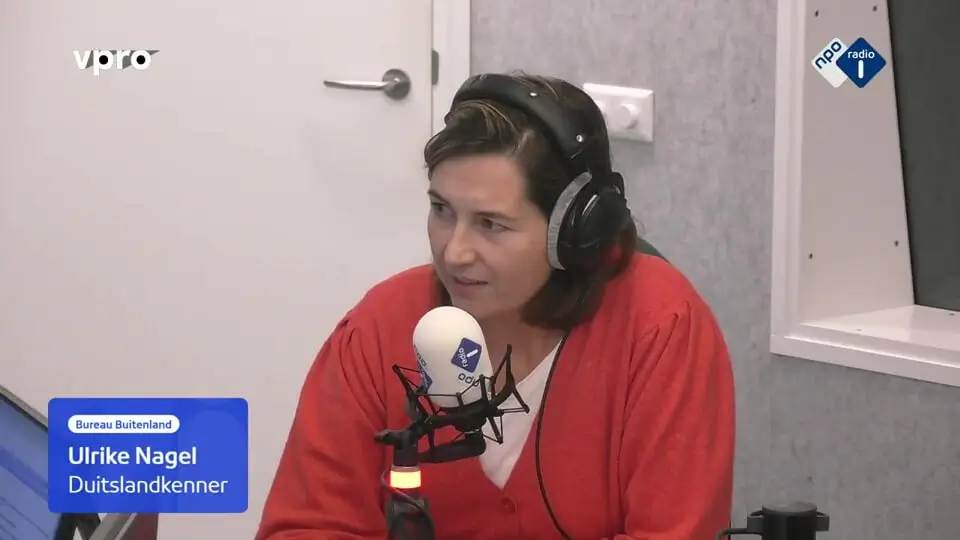
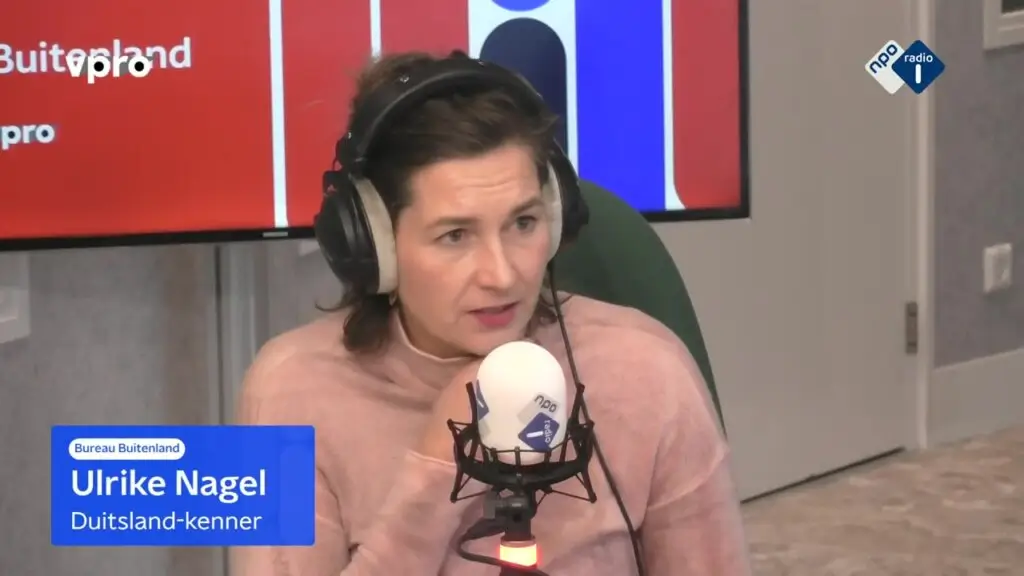
Journalist Ulrike Nagel discusses the rise of Sahra Wagenknecht and her new political party in Germany, as well as the reasons behind her rapid rise in popularity, on Radio 1’s “Bureau Buitenland.”
Ulrike Nagel on NPO Radio 1 discussing Sarah Wagenknecht (VPRO Bureau Buitenland)
The Rise of Sarah Wagenknecht [00:00]: Sarah Wagenknecht, former parliamentary group leader of Die Linke (a post-communist party), has announced her own political party, the “Bündnis Sahra Wagenknecht” (BSW). Immediately after the announcement, her party surged to 12% in the polls, which is unprecedented for a new party in Germany.
Who Is Sarah Wagenknecht? [00:52]: Wagenknecht is a striking figure, often compared to Rosa Luxemburg, a Marxist politician from the past. She is known for her steadfast and often extreme views, which she openly expresses regardless of criticism. She isn’t afraid to debate journalists and other politicians, which makes her a prominent figure.
Reasons for Popularity [02:19]: Her popularity is attributed to the fact that many citizens no longer feel represented by the established centrist parties (SPD, FDP, Greens). People are turning to the extremes, both on the left and the right, and Wagenknecht capitalizes on this sentiment. She focuses on the “ordinary citizen” and criticizes what she sees as “left-wing woke politics” [03:06].
Views and East German Background [04:03]: Wagenknecht’s views partly align with those of the AfD, especially on immigration (she advocates for restrictions, similar to Denmark) and the economy (she wants to target the wealthy). She is also in favor of resuming Russian gas imports and opposes sanctions, which can be partly explained by her East German upbringing [04:24]. She grew up in the former GDR and experienced more of that era than Nagel did. She also learned Russian and has closer ties to Russia than many Western Europeans.
Controversy and the Media [05:41]: Her pro-Russia stance has drawn a lot of criticism, and she is sometimes labeled a “Putin sympathizer.” Nagel notes that Wagenknecht is often treated harshly in the German media, despite her efforts to maintain a calm tone.
Potential and Future [07:07]: A poll in *Bild* showed that a quarter of Germans would consider voting for her. Her voters likely come mainly from the AfD and Die Linke, and in particular from older East Germans who identify with her background. Next year’s state elections in eastern Germany (Thuringia, Saxony, Brandenburg) will be a key test. She aims to transform her movement into a political party by June of next year.
Impact on German Politics [08:48]: Wagenknecht’s rise could lead to a further erosion of Die Linke. Although she has struggled in the past to organize a movement, she is now determined to establish a professional organization.
On “Bureau Buitenland,” you’ll hear international news, reports, and geopolitical analysis. Featuring background stories and noteworthy reports, Monday through Friday from 1:30 p.m. to 2:00 p.m. Hosts: Sophie Derkzen and Tim de Wit