Journalist | Editor | Chairperson | Germany expert / correspondent | in Hilversum & Berlin
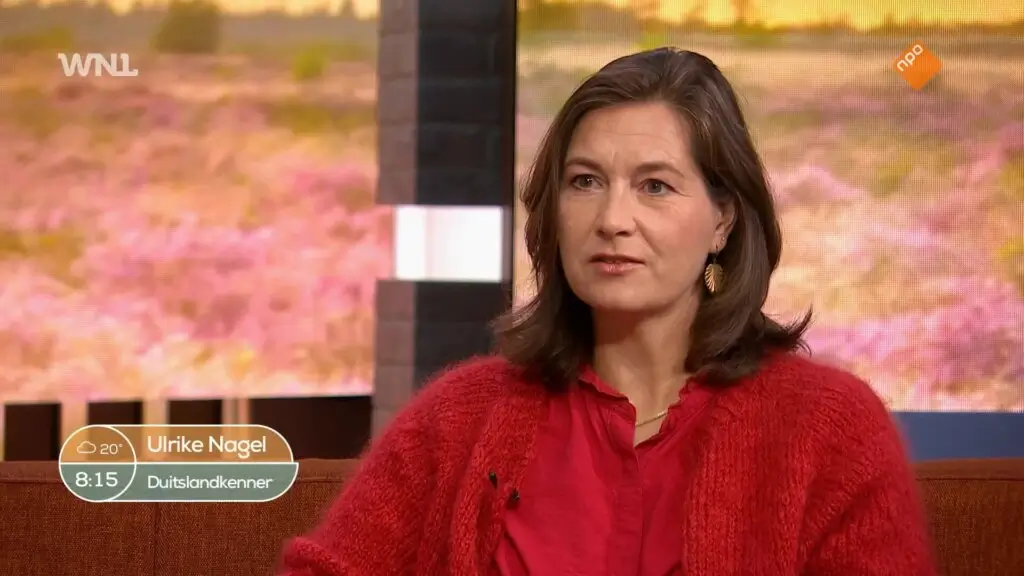
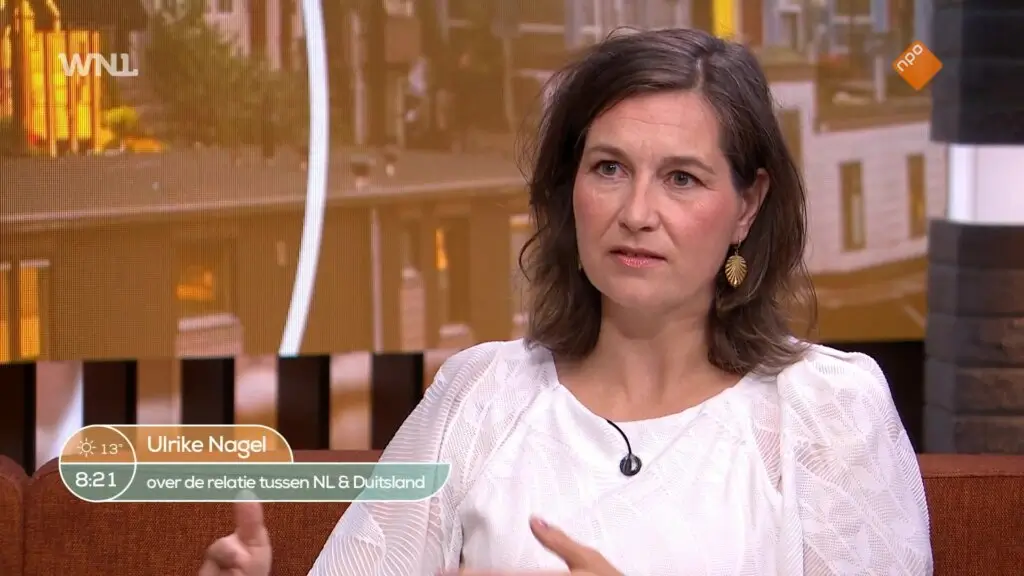
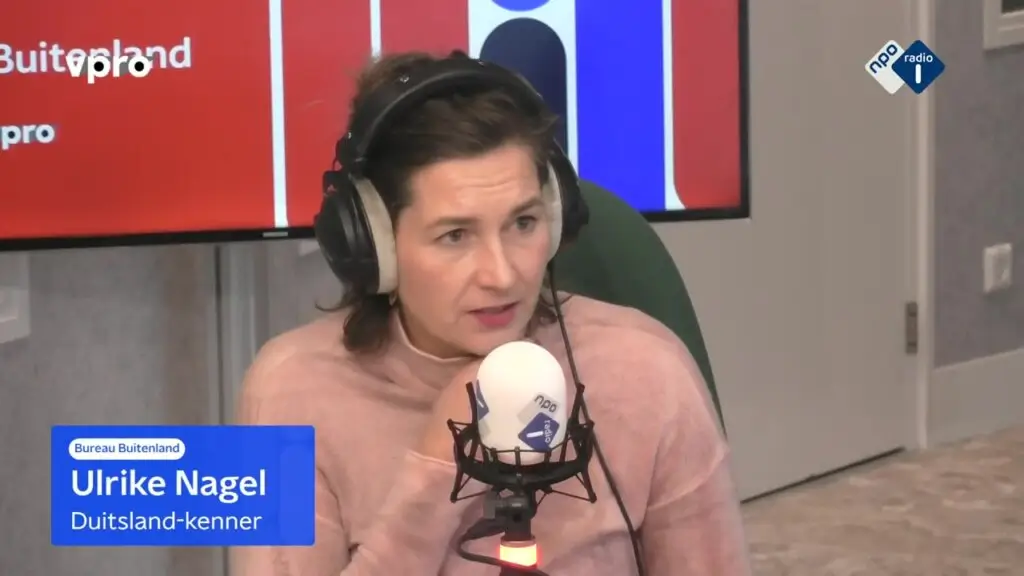
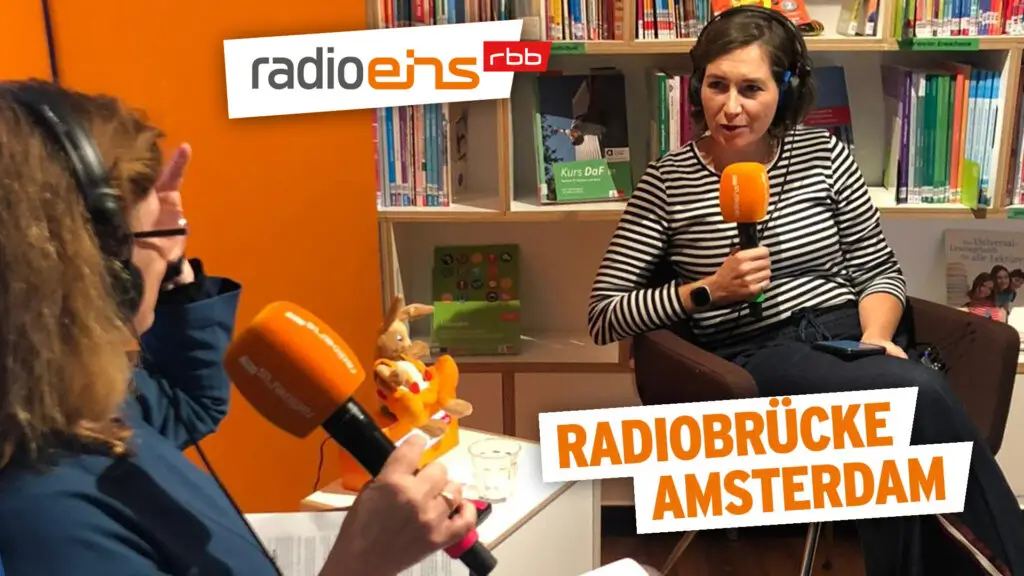
Ulrike Nagel on “Buitenhof” discussing the German elections.
Ulrike appeared on the Buitenhof program on Sunday and spoke about the German elections. What’s at stake, and what does this mean for Europe? A conversation with Member of the Bundestag Otto Fricke and historian Hubert Smeets. Frans Timmermans also joined the discussion to talk about support for Ukraine and the need to strengthen European defense. Virologist Marc van Ranst wrote a book about the COVID-19 pandemic—and the hatred that continues to be directed at him to this day.
Today, some 60 million Germans will head to the polls to cast their votes in what may be the most exciting election in years. And the outcome will be felt not only in Germany but throughout Europe. What does this mean for the country’s future and Europe’s security? We discuss the latest developments. Joining us at the table are Otto Fricke, a member of the Bundestag representing the liberal FDP; Germany expert and journalist Ulrike Nagel; and historian Hubert Smeets.
Germany is gearing up for early Bundestag elections. Following the collapse of the Scholz government, the Federal President announced that Germans will go to the polls on February 23 to elect a new parliament. In the polls, the CDU/CSU, led by Friedrich Merz, is in the lead.
Topics Discussed in This Episode: The Buitenhof broadcast discusses the German elections against the backdrop of a European crisis and the growing influence of the far right.
German Elections and the AfD [00:26]: Germany is facing elections in which the far-right AfD is expected to win a major victory. The question is what this means for Germany and Europe. FDP Member of the Bundestag Otto Fricke expresses his concerns about the 5% electoral threshold for his party [01:12].
The Future of Europe [01:40]: Historian Hubert Schmeets argues that the future of Europe lies in Germany’s hands. A strong AfD victory could undermine the rightto self-determination in Europe, making countries like Poland and Ukraine more vulnerable to the influence of Moscow and Washington. Fricke shares this concern and emphasizes the need for unity among Europeans [02:34].
The Rise of the AfD in East Germany [03:02]: Journalist Ulrike Nagel, originally from East Berlin, explains why the AfD receives a relatively higher share of the vote in the east. Factors include simple answers to complex questions, the unresolved legacy of 40 years of socialism/communism and dictatorship [03:15], and rapid globalization. She describes how people in the east were raised with the idea that fascists and anti-Semites are the capitalists, which has led to a homogeneous worldview and little discussion on these topics [03:43].
Ulrike Nagel at the table on *Buitenhof*, in conversation with Otto Fricke and Hubert Schmeets.
Political Debate and Media [07:49]: Otto Fricke and Hubert Schmeets discuss how to address the rise of the far right. Fricke advocates for engaging in debate with the AfD rather than ignoring it, to prevent voters from feeling that their voices are not being heard [08:04]. Schmeets warns of the presence of a “fifth column” of parties seeking to undermine the democratic order, possibly directed by foreign powers [09:04]. Ulrike Nagel adds that while journalists do now debate with the AfD, the party manipulates the media by filming journalists and editing their responses to suit its own narrative [12:30].
The Shadow of History [14:50]: German policy toward Russia is strongly influenced by World War II and unresolved guilt toward Russia, with Ukraine and other Eastern European countries often left out of the equation. The presence of German troops in Eastern Europe remains a sensitive issue due to historical reasons [19:20].
American Influence and Leadership [17:02]: U.S. Vice President J.D. Vance met with Alice Weidel of the AfD but not with Olaf Scholz, which came as a shock. Fricke views this as a provocation by the U.S. government. The question is whether Germany can assume leadership in Europe, though Schmeets prefers to speak of “accountability” rather than “leadership” [20:14]. He calls on the younger generation to be mindful of the support for Ukraine and to take sanctions against Russia seriously [20:29].
The discussion highlights the complex challenges facing Germany and Europe, partly due to increasing polarization and the burden of history.
Ulrike Nagel at the Buitenhof roundtable in conversation with Otto Fricke and Hubert Smeets.
Buitenhof is the weekly discussion program produced by VPRO, AVROTROS, and BNNVARA, featuring interviews, opinions, and debates, presented alternately by Pieter Jan Hagens, Twan Huys, and Maaike Schoon. Every Sunday, authoritative guests join the show and are critically questioned about their expertise, responsibilities, and, where necessary, their credibility.