On Radio 1: Dispute Over Support for Ukraine in the German Coalition

“No New Money for Ukraine,” read the headline in the Frankfurter Allgemeine Zeitung. This led to significant discord within a coalition already known for its conflicts. For months, the governing parties have been unable to finalize next year’s budget, while the upcoming state elections in the east loom over them like a dark cloud. VRT’s Germany expert Jeroen Reygaert and journalist and Germany expert Ulrike Nagel discuss these tensions.

Timestamps ↴

00:00 Radio 1 Foreign Affairs Desk, Sophie Derkzen
01:04 Ulrike Nagel
02:12 Jeroen Reygaert
04:55 Ulrike Nagel
06:24 Jeroen Reygaert
07:35 Ulrike Nagel
10:06 Jeroen Reygaert
11:56 Ulrike Nagel
12:49 Jeroen Reygaert
14:42 Ulrike Nagel
15:45 Jeroen Reygaert

Summary of the conversation ↴

On the program “Bureau Buitenland,” journalist Ulrike Nagel and Jeroen Reijnaerts discuss the public dispute within the German coalition over support for Ukraine and the impact of the upcoming state elections in eastern Germany.

  • Ongoing Chaos [00:41]: Nagel describes the situation in German politics as an “11” on a scale of 1 to 10 in terms of chaos, especially given Germany’s normally orderly nature. The “traffic-light coalition” (SPD, Greens, FDP) is marked by constant conflicts, with ministers openly criticizing one another.
  • Lindner’s Position [01:50]: The liberal Finance Minister, Christian Lindner (FDP), sent a leaked letter in which he stated that Germany wanted to cut aid to Ukraine in half—from 8 billion to 4 billion euros—and that there would be no further emergency funds. He wants to keep the budget in order and points to frozen Russian assets as an alternative source of funding [02:11].
  • Scholz’s Response [04:13]: Chancellor Olaf Scholz (SPD) was quick to say that Germany will continue to support Ukraine, but he also emphasized the need for a lasting peace settlement. He is walking a fine line between his promises, the need for solidarity with Ukraine, and the growing “war fatigue” among the German public, which is traditionally pacifist [04:55].
  • Regional Elections as a Barometer [06:12]: Elections will take place in September in three states in eastern Germany. The dispute over Ukraine must be viewed partly in this light. Parties skeptical of supporting Ukraine, such as the AfD and the new Bündnis Sahra Wagenknecht (BSW), are polling high, sometimes even at more than half the votes in Thuringia [07:01].
  • Fear of War [08:04]: Especially in eastern Germany, the fear of war and the call for negotiations are more pronounced. East Germans, who lived through a longer period of the Cold War, feel more threatened by the escalating arms industry and the risk of Russian interference. Campaigns such as “nicht unser Krieg” are finding a strong response here [08:39].
  • Poor Polls for Coalition Parties [12:37]: The coalition parties (SPD, Greens, FDP) are performing historically poorly in the East German states, sometimes even falling below the 5% electoral threshold. This turns the state elections into a sort of “midterms” or a reckoning with the government in Berlin and even with “Western thinking” in a broader sense [13:04].
  • Reaction in Ukraine [09:54]: In Ukraine, the dispute will be followed with concern, as Germany is the second-largest financial backer. Relations were already strained at the start of the war due to Scholz’s hesitation, and this new disagreement could further undermine morale. Putin may be playing for time, hoping that European support will wane [11:39].
  • Difficult Cooperation [14:27]: The coalition, consisting of parties that are naturally divergent, is not accustomed to the Dutch “polder model” of open discussion and compromise. Although none of the three parties stands to gain from new elections given their low poll numbers, the urge to distinguish themselves remains strong. Nagel expects the coalition to hold on until next year’s national elections [15:42], but German politics remain turbulent, with regional elections having a strong influence on national politics.
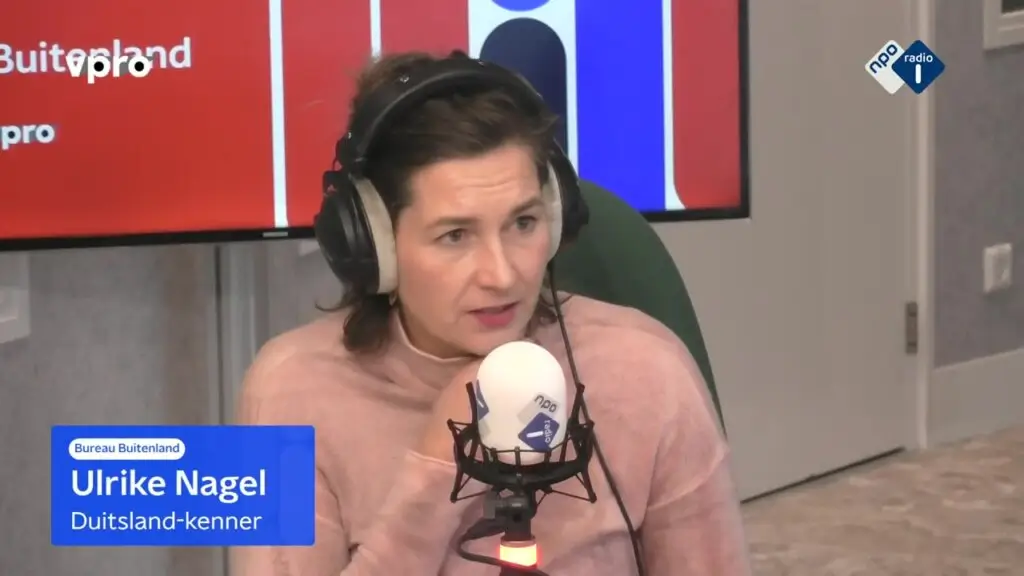
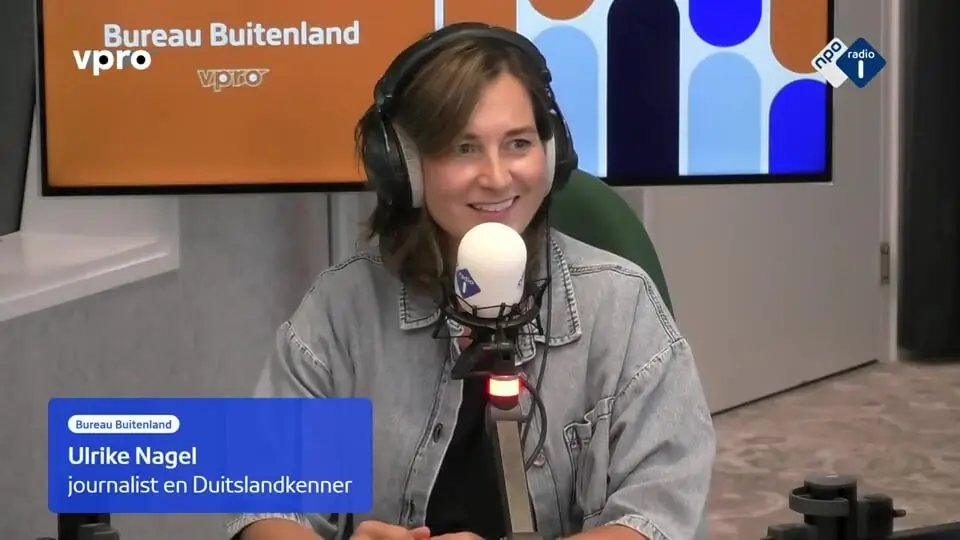
Ulrike Nagel op NPO Radio 1 Bureau Buitenland in gesprek met Sophie Derkzen over Ruzie over steun aan Oekraïne in Duitse coalitie.
Ulrike Nagel on NPO Radio 1’s “Bureau Buitenland” in conversation with Sophie Derkzen about the dispute over support for Ukraine within the German coalition.
Background ↴

A dispute has erupted within the German government over military aid to Ukraine. Liberal Finance Minister Christian Lindner has warned that, in principle, no additional funds are available this year for new, unplanned arms deliveries, as the government must tighten its belt. Chancellor Olaf Scholz’s Social Democratic Party (SPD) reacted with mixed feelings to that announcement. And the Greens, who are also part of the government, accused Minister Lindner of failing to understand the seriousness of the geopolitical threat. “Peace and freedom are being sacrificed to remain debt-free,” scoffed Green Party Bundestag member Robin Wagener.

A leaked letter from the German finance minister has cast doubt on further German aid to Ukraine. So far, Germany has been the second-largest provider of aid to Ukraine, after the U.S.

The German newspaper Frankfurter Allgemeine Sonntagszeitung (FAS), which had access to the letter, emails, and other documents, reports that, according to Liberal Finance Minister Lindner, there is no more money available for new aid. The government, however, continues to emphasize that support will continue as usual.

New measures are only possible if funds are available in this year’s and next year’s budgets, Lindner reportedly wrote to the foreign and defense ministers earlier this month. And: “Please ensure that the upper limits are not exceeded.”

At this point, that would mean further aid is no longer possible. For this year, Germany is allocating eight billion euros in aid to Ukraine; in next year’s budget, that amount has been cut in half.

Parliament could still decide to increase that amount, however. That seems unlikely, though, because tough negotiations have already taken place regarding next year’s budget.

Spokespersons in Berlin did their best on Monday to quell the growing unease over the funding. According to them, Germany still stands firmly behind Ukraine, and Minister Lindner’s announcement has no impact on the amount of aid, but only on the method of financing. The Ministry of Finance stated that it expects the planned 50 billion credit line, as decided by the G7, to be available starting early next year. The Ministry of Defense also assured that it will always strive for “pragmatic solutions.”

The fact that the aid appears to be being scaled back has drawn criticism primarily toward Chancellor Scholz, including from within his own government. On the one hand, Scholz has always emphasized that Germany will support Ukraine for as long as necessary. On the other hand, he would like to present himself as a “peace chancellor” to Germans who are concerned that they are being drawn further and further into the war.

Elections are coming up next month in several eastern German states, and parties arguing that the money going to Ukraine would be better spent in Germany are polling strongly. But a government spokesperson denies that this is a factor. He calls the suggestion from the Christian Democratic Union (CDU), the opposition party, that Scholz wants to tighten the purse strings for this reason “scandalous.”
Link: NPO Radio 1

VPRO Radio 1 - Bureau Buitenland met Tim de Wit en Sophie DerksenOn “Bureau Buitenland,” you’ll hear international news, reports, and geopolitical analysis. Featuring background stories and noteworthy reports, Monday through Friday from 1:30 p.m. to 2:00 p.m. Hosts: Sophie Derkzen and Tim de Wit