Journalist | Editor | Chairperson | Germany expert / correspondent | in Hilversum & Berlin
Ulrike on Radio 1 about Romeo and Juliet-style scenes in the Berlin Senate
Romantic relationships in the workplace are the talk of the town in Berlin. The mayor there has just announced that he is in a relationship with his education commissioner. Berliners can’t stop talking about it. But now the question is whether this is actually allowed, says Germany expert Ulrike Nagel on “Bureau Buitenland.”
Timestamps ↴
00:00 Radio 1 Bureau Buitenland, Sophie Derkzen 00:45 Ulrike Nagel 01:16 Sophie Derkzen 01:22 Ulrike Nagel
Summary of the conversation ↴
Journalist Ulrike Nagel discusses on Radio 1 the controversy surrounding the relationship between Berlin’s incumbent mayor, Kai Wegner, and his deputy mayor, Katharina Günther-Wünsch.
Love in the Senate [00:15]: The German media are reporting extensively on the relationship between Berlin Mayor Kai Wegner and his alderwoman for Education, Katharina Günther-Wünsch. Both are members of the same party (CDU). After initial reluctance, they confirmed their relationship once rumors began circulating and Wegner’s divorce became public [00:45].
Conflicts of Interest and Rules [01:14]: The main question currently being debated in Germany is whether this relationship is permissible in a political context. It turned out that no formal rules exist for such situations in the Berlin Senate. The preliminary answer is that it is permissible, although concerns about conflicts of interest remain, especially regarding the allocation of budgets [01:21]. They have, however, promised to keep their professional and private lives separate [02:00].
New Regulations [02:11]: In response to this situation, new rules have been established. Should a conflict arise, authority will be transferred to the deputy mayor (councilor for Finance) and, if necessary, to the former mayor of Berlin, Franziska Giffey.
Criticism and the Future [02:44]: However, the anti-corruption organization Transparency Germany is calling for stricter “compliance rules,” similar to those for companies. Although Germans generally love rules, it is still unclear whether such rules will be implemented. The discussion is currently overshadowed by other political issues, such as snow and the AfD [03:09].
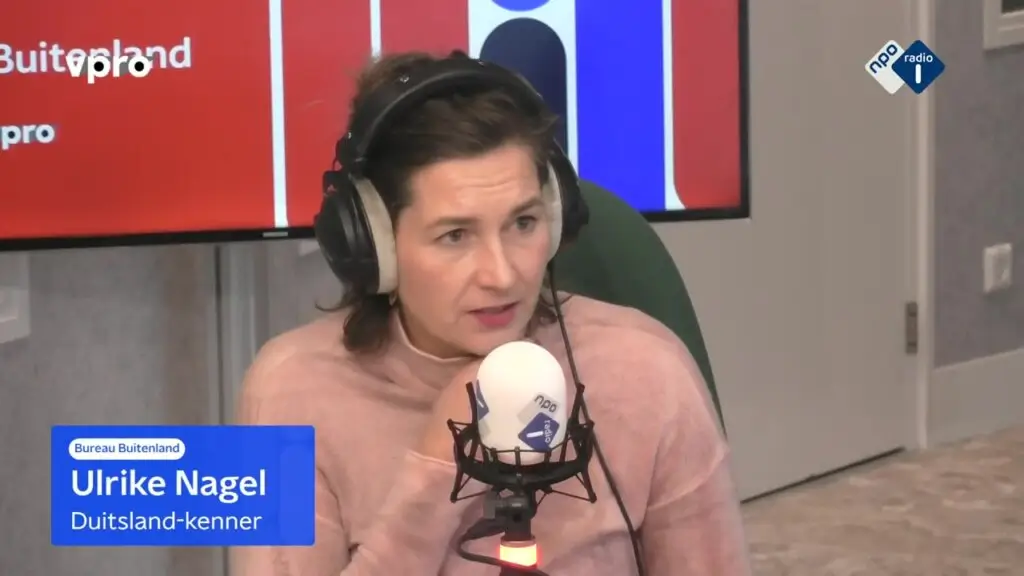
Ulrike Nagel in the Radio-1 studioBackground ↴
A while ago, several newspapers first reported on a possible relationship between Wegner and Günther-Wünsch, says the Germany expert. Kai Wegner has been mayor of Berlin since May of last year, and Katharina Günther-Wünsch has since served as the senator for education in the Berlin Senate, Berlin’s city government. “Neither of them initially commented on the rumors. But it soon became known that Wegner and his now ex-wife had split up.” Nagel says that this led to a flurry of questions in the media once again. “So then they finally confirmed the news.” But now the question is whether this is actually allowed, Nagel explains.
Conflicts of Interest
“It turns out there are no formal rules on this, so the answer to this question for now is: It is allowed. However, concerns about conflicts of interest aren’t immediately dispelled,” says Nagel. She explains that this couple belongs to the same party, the CDU, but there are still concerns about conflicts of interest. “What do you do if they get into an argument within the Senate even though they belong to the same party?” The journalist reports that they’ve discovered there are no formal rules within the Senate for such a situation. “There are questions about this within the governing body, but the couple has promised to keep their professional and private lives separate.”
Wegner and Günther-Wünsch
New Rules
There were many critical comments on social media. The Senate also considered this situation, and as a result, new rules have now been established, Nagel explains. Should a conflict arise, the mayor will not intervene personally; instead, his deputy, the deputy mayor, will handle it. “He is the finance commissioner and must then mediate. And if it’s a financial matter, the responsibility is then passed on to yet another council member. That would be Franziska Giffey, the former mayor of Berlin.” But the expert notes that for some, this isn’t enough. “The anti-corruption organization Transparency Germany wants to have these rules enshrined in law—a kind of compliance framework that, until now, has only existed in the business world.”
On “Bureau Buitenland,” you’ll hear international news, reports, and geopolitical analysis. Featuring background information and remarkable stories, Monday through Friday from 1:30 to 2:00 p.m. Hosts: Sophie Derkzen and Tim de Wit