Journalist | Editor | Chairperson | Germany expert / correspondent | in Hilversum & Berlin
On Radio 1 “Bureau Buitenland”: Merz Gets to Get to Work
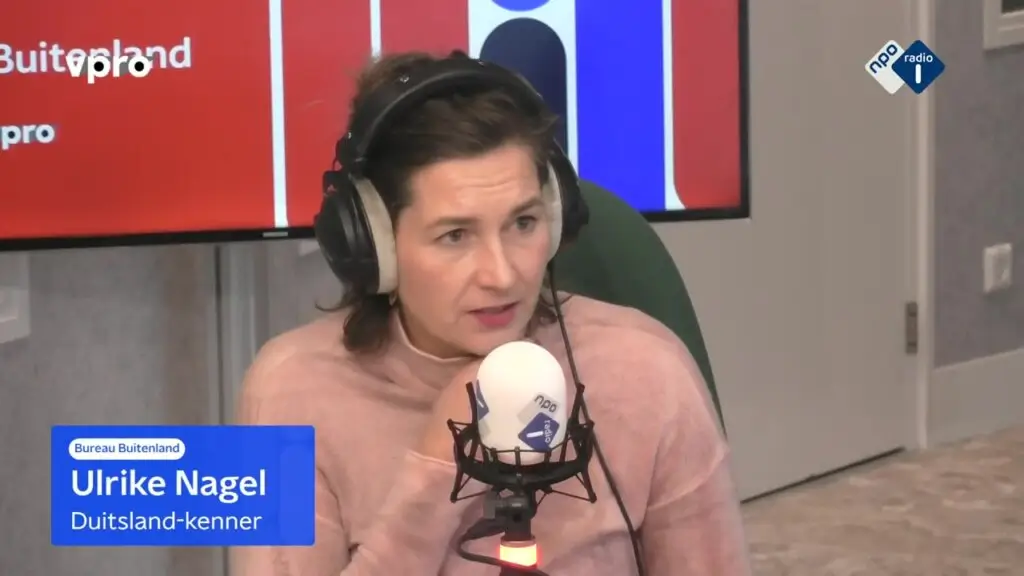
After weeks of following the German elections through the series “Deutschland Wunderland,” it is now clear who will become the new chancellor. It is up to Friedrich Merz to form a new coalition, but the big winner is the AfD, which saw its voter base double. The task ahead of Merz is no small one: Germany is yearning for political and economic change. There are also major challenges on the international stage, and the question remains whether the country can once again play a leading role in Europe under Merz. VRT correspondent Jeroen Reygaert, VPRO colleague Britta Hosman, and Germany expert Ulrike Nagel discuss this. Hosted by: Eva Koreman.
Ulrike Nagel in conversation on Radio 1 with Jeroen Reygaert and Eva Koreman about the results of the German elections.
Summary of the points discussed:
Winners and losers: The CDU (Christlich Demokratische Union Deutschlands) is the party with the most votes and has been tasked with forming a coalition. The far-right AfD (Alternative für Deutschland) is the big winner in terms of vote gain, but the other parties do not want to cooperate with them. Die Linke is the surprise, having seen a strong rise, particularly thanks to social media. The SPD (Sozialdemokratische Partei Deutschlands) suffered a historic defeat.
Reasons for the results: Germans voted for change, as evidenced by the gains on the political fringes (the far left and the far right). The AfD capitalizes on sentiments in East Germany, where people do not feel connected to West Germany. Social media plays a crucial role in reaching young people. Many young people voted for the AfD and Die Linke, indicating a strong desire for change.
The challenges facing Friedrich Merz: Future Chancellor Merz (CDU) faces the challenge of resolving Germany’s economic and political problems. He must build bridges with voters in East Germany and the younger generation, who voted overwhelmingly for the fringe parties.
International leadership: Merz wants to play a leading role in Europe and has already spoken out strongly against U.S. policy under Donald Trump. He emphasizes the need for an independent and stronger Europe in the areas of defense and security. This is a revolutionary step for a German politician.
Possible coalition: The most likely coalition is between the CDU and the SPD—a “forced marriage” because there are no other options. Merz is under immense pressure to “deliver”; otherwise, there is a high probability that the AfD will become Germany’s largest party in four years.
On “Bureau Buitenland,” you’ll hear international news, reports, and geopolitical analysis. Featuring background information and noteworthy stories, Monday through Friday from 1:30 p.m. to 2:00 p.m. Hosts: Sophie Derkzen and Tim de Wit