Journalist | Editor | Chairperson | Germany expert / correspondent | in Hilversum & Berlin
On Radio 1: German coalition ends in a bitter split
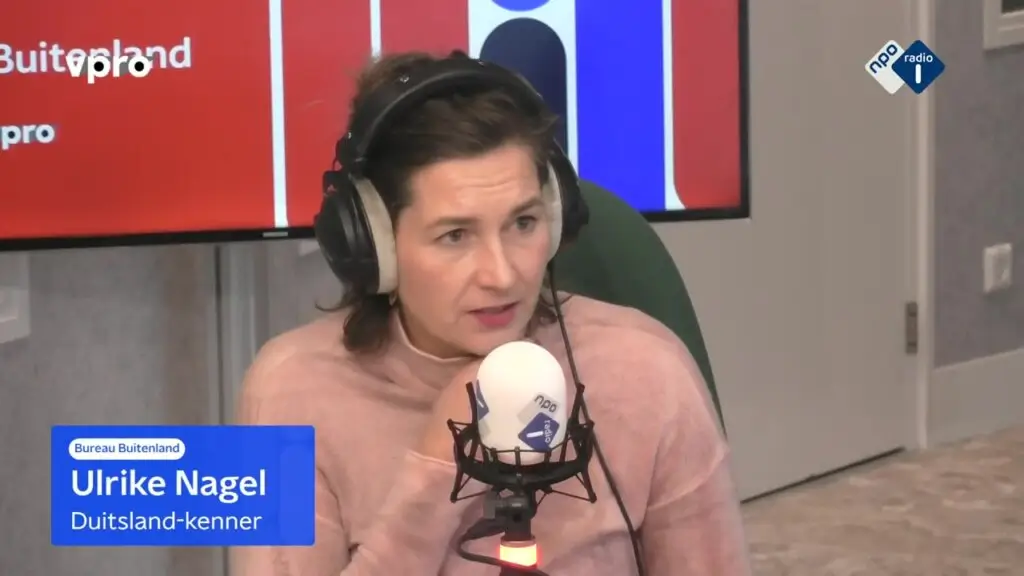
There was never any real love lost between the German governing parties—the FDP, the SPD, and the Greens. But now that Chancellor Olaf Scholz has fired his Finance Minister Lindner, the end of the coalition seems inevitable. According to Scholz, Lindner is “selfish” and “disrespectful.” What’s behind this? And what does the collapse of the coalition mean for Europe and German support for Ukraine? Journalist and Germany expert Ulrike Nagel discusses this with Tim de Wit on Radio 1’s “Bureau Buitenland.”
Timestamps ↴
00:00 Radio 1 Bureau Buitenland, Tim de Wit 00:50 Ulrike Nagel 01:41 Olaf Scholz 02:14 Ulrike Nagel 03:50 Christian Lindner 04:46 Ulrike Nagel
Summary of the conversation ↴
Journalist Ulrike Nagel discusses on Radio 1 the political chaos in Germany following the collapse of the coalition, in which Chancellor Olaf Scholz (SPD) dismissed Finance Minister Christian Lindner (FDP). Nagel rates the chaos on a scale of 1 to 10 as an 11 by German standards, given the country’s usual orderliness [00:41].
The Fall of the Coalition [01:29]: The “marriage of convenience” between the SPD, the Greens, and the FDP has definitively collapsed. Scholz dismissed Lindner because, in his view, Lindner “has betrayed his trust too often” and focused too much on his own party and its base [02:10]. Lindner, on the other hand, accuses Scholz of pursuing a boring and unambitious policy that ignores economic reality [03:45].
Fundamental Differences [04:20]: The conflict centers on fundamental disagreements over economic policy. The FDP wants to tighten the purse strings, while the SPD and the Greens want to borrow more, especially given the “emergency” caused by the war in Ukraine, which they view as an attack on all of Europe [05:01]. These parties are diametrically opposed, which Nagel describes as a “bitter split” [05:54].
Political Consequences and New Elections [06:12]: Most FDP ministers have expressed solidarity with Lindner and have resigned. Scholz wants to continue as a minority government for the rest of the year, but the opposition is pushing for a quick vote of confidence and new elections [06:17]. The governing parties are faring very poorly in the polls, with only 14% of Germans expressing satisfaction [07:22].
Role of the CDU and Far-Right Parties [07:40]: Scholz is seeking cooperation with the CDU led by Friedrich Merz. Merz, who has long sought to come to power, is doing well in the polls and must be cautious in his outreach to prevent far-right parties such as the AfD and BSW (Bündnis Sahra Wagenknecht) from further capitalizing on the division in the political center [08:07].
Impact on Support for Ukraine [09:30]: Support for Ukraine is a key focus. Scholz wants to allocate more funds for this, but needs the CDU’s cooperation, as other parties have reservations about further support. It’s a “tightrope walk” to see how this will play out in practice [10:02].
The coming weeks and months will be turbulent in German politics, likely leading to a quick confidence vote and new elections.
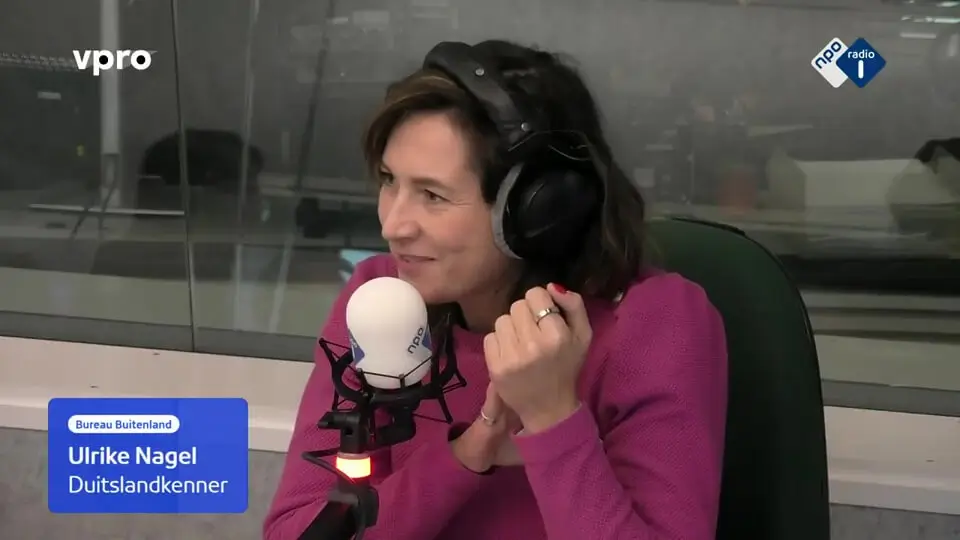
Ulrike Nagel in the Radio 1 studio discussing the German coalition following Lindner’s dismissal
Coalition at an End: FDP Ministers Withdraw Completely from the Traffic-Light Coalition
The traffic-light coalition is over. Finance Minister Christian Lindner (FDP) was dismissed this evening by Chancellor Olaf Scholz (SPD). Scholz plans to call a confidence vote on January 15 and is aiming for new elections in late March.
Traffic-light coalition of SPD, Greens, and FDP collapses
Chancellor Scholz (SPD) dismisses his Finance Minister Lindner (FDP)
Scholz wants to hold a confidence vote in the Bundestag on January 15.
The chancellor is aiming for new elections in late March
Lindner calls it a “calculated break” in the coalition
The Greens want to remain in the government
FDP ministers are withdrawing completely from the traffic-light coalition
The traffic-light coalition has failed after just under three years. On Wednesday evening, Chancellor Olaf Scholz dismissed Finance Minister Christian Lindner.
As Scholz announced at a press conference, he did so to “ward off damage to the country.” The chancellor also wanted to suspend the debt brake in light of the consequences of the war in Ukraine. The FDP rejected this. “We need a government that is capable of taking action and has the strength to make the necessary decisions for our country,” Scholz said. Lindner had acted selfishly and thought only of his party. “Minister Lindner has betrayed my trust too many times. There is no basis for trust,” Scholz said.
Scholz now intends to seek a vote of confidence in the Bundestag on January 15. According to the chancellor, new elections must be held by the end of March at the latest.
Lindner Blames Scholz for the Failure of the Traffic-Light Coalition
In a press statement following the meeting and his resignation, Lindner said: “Unfortunately, Olaf Scholz has shown that he lacks the strength to give our country a fresh start. Instead, since this afternoon, the chancellor has been demanding that I suspend the debt brake in the Basic Law. I could not agree to that.”
He suspected that Scholz had already prepared his press statement for the evening in the run-up to the meeting, the FDP leader said. “We put forward proposals for an economic turnaround to put our country back on the path to success. These proposals were not even accepted by the SPD and the Greens as a basis for discussion. Since the chancellor’s carefully prepared statement tonight, we know why.” Linder accused Scholz of terminating cooperation with him and the FDP, thereby causing a “calculated rupture in this coalition.”
FDP Ministers Withdraw Completely from the Governing Coalition
The FDP is withdrawing all its ministers from the federal government as early as tonight. Party leader Christian Dürr announced this in Berlin. The FDP is thereby bringing an end to the three-party alliance of the “traffic light coalition.” The FDP has four ministers in the traffic light government:
On “Bureau Buitenland,” you’ll hear international news, reports, and geopolitical analysis. Featuring background stories and noteworthy reports, Monday through Friday from 1:30 p.m. to 2:00 p.m. Hosts: Sophie Derkzen and Tim de Wit