Journalist | Editor | Chairperson | Germany expert / correspondent | in Hilversum & Berlin
On Radio 1: A Reunited Germany, 35 Years After the Wende
November 9 marks exactly 35 years since the Berlin Wall fell. On that autumn evening in November 1989, the GDR—albeit after weeks of massive protests, but still quite suddenly—opened the borders between East and West Berlin. It marked the historic beginning of the reunification of Germany, which had been divided for decades.
The Wall has been gone for 35 years now, but the differences between East and West are still very much alive. At the same time, election results sometimes seem to be dividing Germany anew, and radical voices have been gaining ground in recent years. And all this while the German government collapsed this week, forcing Germans to head to the polls early.
How is our neighboring country faring 35 years after the fall of the Wall? What traces of the Wende can we still see today? And how might the Iron Curtain still live on in the hearts and minds of our eastern neighbors? Coen Verbraak discusses these topics on *De Publieke Tribune* with experts and eyewitnesses to Germany before and after reunification.
Guests: Anja Fricke, Ulrike Nagel, and Hanco Jürgens
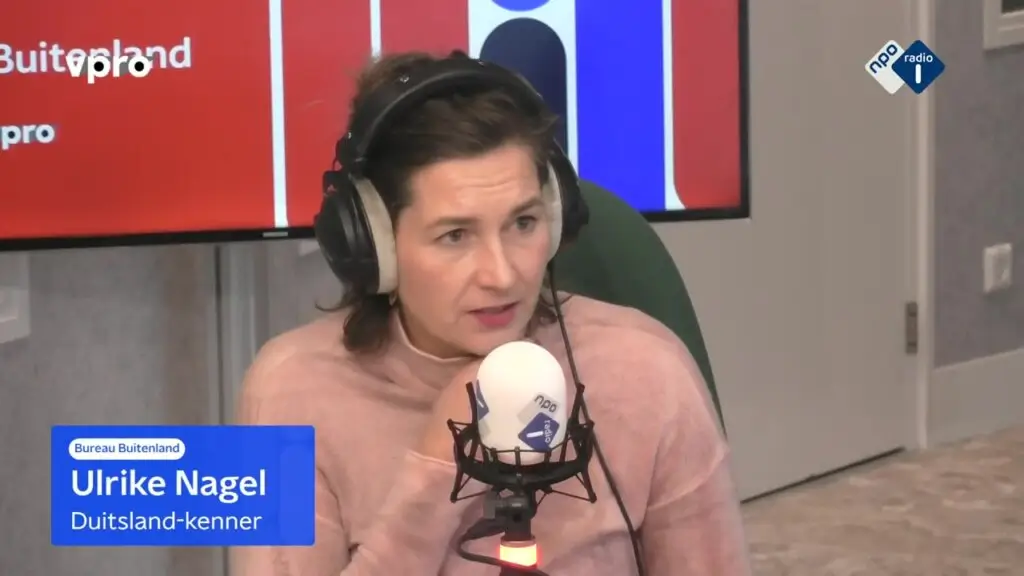
Journalist Ulrike Nagel, cultural studies scholar Anja Fricke, and Hanko Jürgens of the Germany Institute discuss the fall of the Berlin Wall 35 years ago and its consequences for reunified Germany on the “Public Tribune.”
The Fall of the Wall and the Current Political Crisis [01:09]: The fall of the Wall 35 years ago marked the beginning of German reunification, but the differences between East and West remain significant. A current topic is the collapse of the German coalition, in which Chancellor Scholz dismissed the finance minister. Jürgens calls this “unexpected, yet expected” [01:59]. Nagel links the current political crisis to Trump’s election victory and the divisions in Germany, where the extremes are receiving a lot of attention due to a “silent” center [03:15]. She is concerned about the AfD’s strong showing and the way in which established parties and the media are handling it [04:14].
The Center and Economic Concepts [05:05]: Jürgens emphasizes the question “where has the center gone?” and argues that the center has failed to develop new economic concepts since the credit crisis. The upcoming elections in Germany are crucial for the future of Europe, given the debate over investments and adherence to the “Schuldenbremse” [05:52].
Memories of the Wende [07:04]: Anja Fricke, who was 11 years old when the Wall fell, slept through the moment, but remembers the next morning as radically different. She talks about her track coach, who had suddenly disappeared [07:44]. Ulrike Nagel (10 years old) remembers above all the material changes: the opportunity to buy a Barbie and the abundance of Western products in West Berlin, which smelled like a paradise of coffee and Haribo Goldbären [09:08].
The Wall Fell Too Soon [10:43]: Hanko Jürgens explains that the Wall fell “too soon” due to a misunderstanding at a press conference held by Politburo member Günter Schabowski, who said that the travel regulations would take effect “sofort” (immediately). West German television played a major role in spreading this news, after which people flocked en masse to the border crossings and the border post at Bornholmer Straße was opened [10:49].
Life After the Wall [13:21]: Nagel saw the city change rapidly, with video rental stores popping up and a new selection of goods in supermarkets. Libraries, too, were stocked with lighter Western books, such as those by Enid Blyton [32:37]. Fricke recalls the biggest change as mass unemployment, including that of her brother [33:15]. Ulrike ended up in the Netherlands after a vacation in Spain, driven by a desire to travel that her parents did not share [35:35].
Exploring Youth [15:46]: Ulrike Nagel’s podcast “Over de Muur” explores her own childhood in the GDR and the “sixes culture” in the Netherlands, which she doesn’t share [16:12]. She spoke with her parents and friends, and it became clear that Germans are more reluctant to talk about the past. Nagel felt uncomfortable when critically questioning her father about the GDR, which he did not view very critically. She also investigates a possible Stasi file on her grandfather, which shows how little the past was discussed within families [36:20].
The GDR Today [41:05]: Hanko Jürgens argues that the GDR still exists “in people’s minds.” Major transformations and mass layoffs following the Wende have led to “fear of globalization” and “transformation fatigue.” Recent crises, such as COVID-19, trigger old feelings of oppression and distrust toward the government [41:21]. Significant differences remain between East and West Germany, for example in attitudes toward the war in Ukraine, which the AfD exploits for campaigns such as #nichtunserkrieg [43:04].
Unfinished Unity [44:43]: Anja Fricke and Ulrike Nagel are glad that the GDR no longer exists, but emphasize that the process of coming to terms with the past and achieving equality between East and West is not yet complete, as evidenced by pensions, management positions, and the feeling of being “absorbed” by the West [45:56]. The conversation demonstrates how openly the two East German women can discuss these issues in the Netherlands—a topic that remains sensitive in Germany [47:22].
Ulrike Nagel on Radio 1 in the program “Publieke Tribune” discussing 35 years since the fall of the Wall.
Every Saturday afternoon on Radio 1, *De Publieke Tribune* brings you the most compelling stories from the very fabric of society. Hosted by Coen Verbraak, each week new guests share their experiences regarding social issues that concern them or hinder them in their daily lives.