Journalist | Editor | Chairperson | Germany expert / correspondent | in Hilversum & Berlin
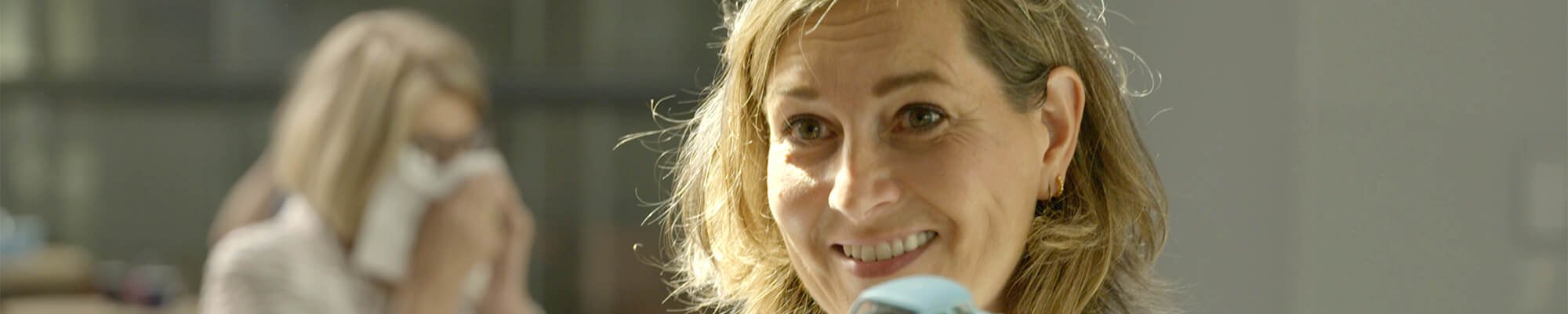
Ulrike Nagel as a guest on Radio M Utrecht (“Aan Tafel!”) to discuss the podcast
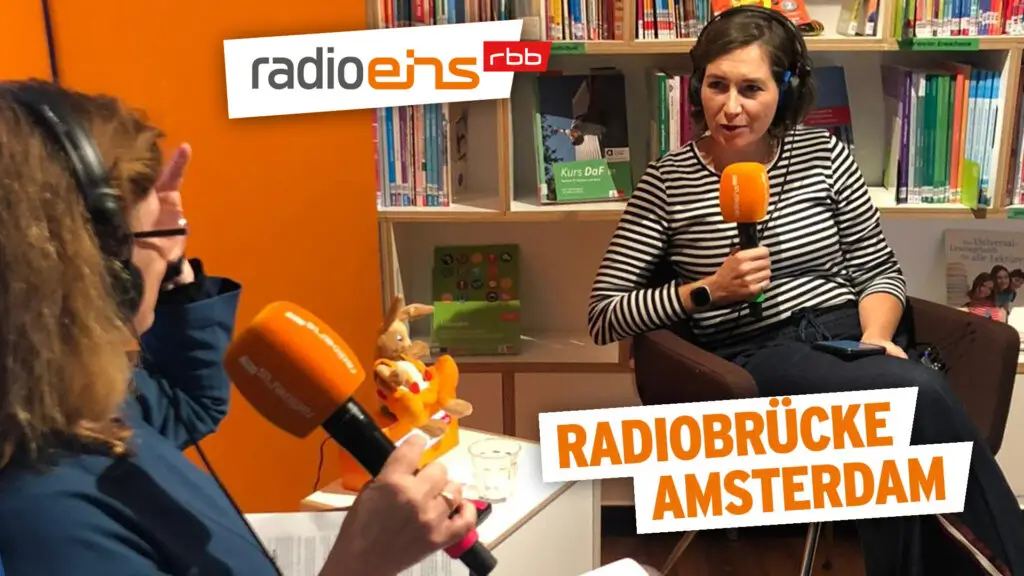
German Day – Journalist Ulrike Nagel talks to Liesbeth de Moor about her podcast “Over de muur” (Over the Wall), in which she explores how the Wall—and its fall—influenced her childhood in East Berlin, and what role the Netherlands played in the militaristic state to the east.
Topics covered in this conversation
Journalist Ulrike Nagel discusses her podcast “Over de Muur” on Radio M Utrecht, in which she explores her childhood in East Berlin (GDR) and the impact of the Wall.
Ulrike Nagel as a guest on Radio M Utrecht (“Aan Tafel!”) discussing the podcast
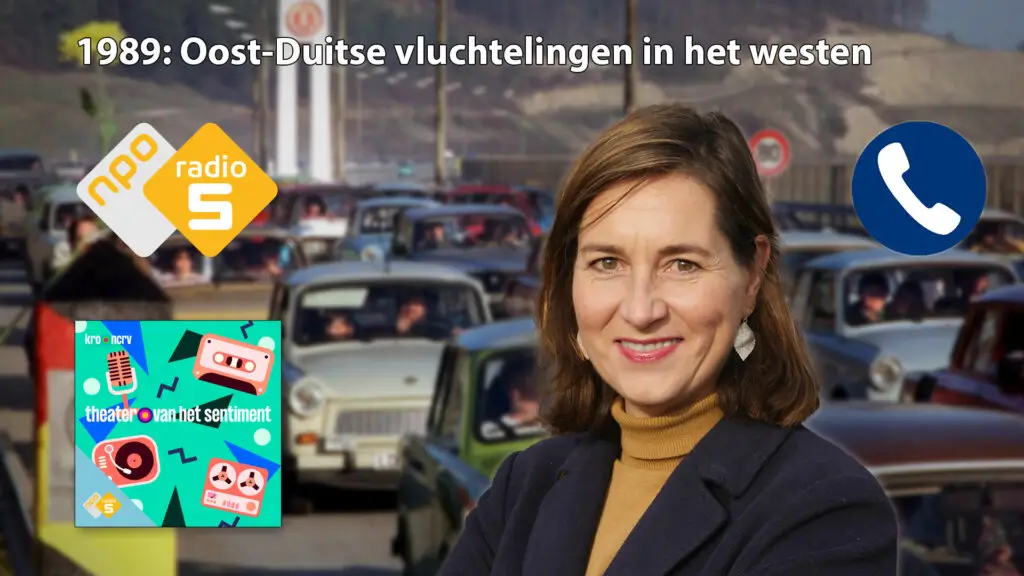
Podcast “Over de Muur” [00:34]: Nagel grew up in East Berlin and has fond memories of her time there. However, she wanted to investigate whether these memories align with reality. The podcast, consisting of six episodes of just over half an hour each, explores how significantly the Wall shaped her life and that of her classmates, the role of the Netherlands in the Cold War, and her family’s involvement (including with the Stasi). The podcast’s title is inspired by the well-known song by Klein Orkest [01:30].
Background on Ulrike Nagel [03:14]: Nagel was born in 1979 and met a Dutchman when she was 15, which motivated her to learn Dutch and move to the Netherlands. She still holds a German passport but speaks Dutch fluently. In the meantime, she also lived in Berlin with her family for eight years before returning to the Netherlands [04:25].
Childhood in East Germany [05:03]: She describes her childhood as happy, despite living under a dictatorship. She considered the military discipline at school to be normal, including the national anthem, socialist salutes, and youth organizations [05:14]. It wasn’t until later, as an adult, that she realized how strict this was, because she didn’t know any different [08:02].
The Wall and Differences with the West [12:44]: Although she lived literally far from the Wall, as a child she was very much aware of the two systems and the differences with West Germany. This was evident from the lack of Western products (such as Barbies) and the quality of clothing. Her West German family would send her clothes, but without recognizable brands, because brand-name clothing was banned at school [13:21].
Exploring the Past [14:29]: Her goal with the podcast is to nuance the image of oppression and poverty in East Germany by showing that it was possible to live a good life under a dictatorship [15:09]. At the same time, she wanted to explore on a deeper level what didn’t align with her feelings. Through her friend Anita, she discovered that Anita’s father had faced restrictions because he refused to cooperate with youth organizations [17:14]. It also turned out that Anita’s family history, which had only recently been researched, contained inconsistencies, such as the suspicious death of her grandfather [20:02].
The Fall of the Wall and Its Consequences [20:27]: Nagel has vague memories of the uncertainty surrounding the fall of the Wall. Her parents had to reinvent their lives in a completely new system, while she, as a child, sought refuge in music and books [22:07]. She recounts how her mother was approached by the Stasi and how difficult it was to question her father—who was proud of his time in the GDR—about his past [22:33].
Germany, Today [24:08]: Although Germany is officially reunified, the differences between East and West remain clearly visible, especially in political analyses of why voters in the East tend to vote more extremist. These frustrations are rooted in the early 1990s and the period before that, when there were two very different Germanys [25:04].
Future of the Podcast [25:25]: Nagel hopes for a follow-up to the podcast, as there are still unanswered questions, and she has been approached by many other East Germans in the Netherlands with interesting stories.
The lunch program *Aan Tafel!* on Radio M Utrecht serves up a variety of music every day. In addition, interesting guests visit the studio daily, and reporter Robert Jan Booij travels throughout the province in search of special stories and events. The show focuses extensively on day trips, culture, health, and nature.